

How Many Bulldog Breeds Are There?


Did you know that there are so many different Bulldog breeds that we would need 3 texts just to name them all? Here is a little guide through the most common bulldog breeds.
There is a wide variety of breeds where you can find Bulldog features or DNA, but we can not possibly write about all of them. So, we have collected some of the most popular and interesting bulldog breeds to present to you and spice things up a little! Let’s check it out.
How Many Bulldog Breeds are There in the World?
Ah, bulldog breeds! These stout-hearted, squishy-faced little fellas are just too adorable to resist. Who can say no to those wrinkly faces and wiggly bums? But did you know that there are several variations of bulldogs out there, and each of them has its own sparkly personality and temperament that we adore?
Don’t worry; we will sift through the jumble and focus on the most popular five breeds. Get ready for some bulldoggy goodness!
But the main question still stands – how many bulldog breeds are there? Well, there are quite several bulldog variations out there. From the English bulldog to the French, the Olde English Bulldogge, Catahoula, or Ca De Bou – they all bring their own unique quirks to the table. We have chosen some of the most popular and famous bulldog breeds in the world, and here are the most interesting facts about them:
English bulldog breed
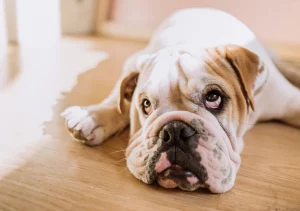
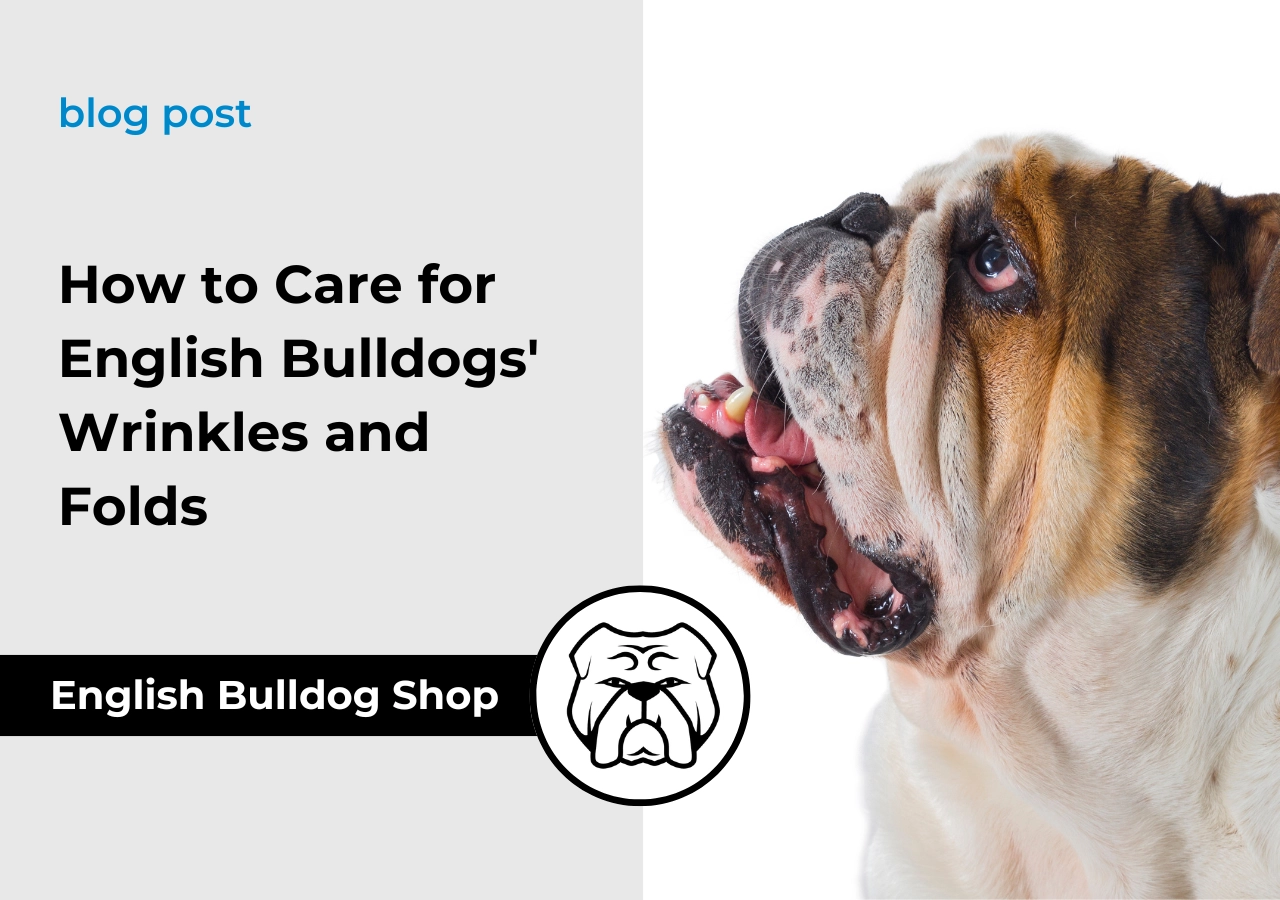
Now, let’s see our first contender for the Bulldog Crown – the English bulldog. These delightful chunksters are known for their distinctive wrinkled snouts, droopy faces, and adorable underbites. English bulldog breed is known for its thick muscular body, short legs, and wide chest look, and they are not so tall! They have about 16-17 inches or around 40 cm. Since they are a bit lazy and are not big fans of activities, they can be prone to obesity, so you should make sure to give them a balanced bulldog diet!
They may not be the fastest runners, but boy, they make up for it with their charm and sweetness. English bulldogs are quite sleepy pups, so if you’re looking for a snuggle buddy, look no further – they love their comfy doggy beds!
French bulldog breed
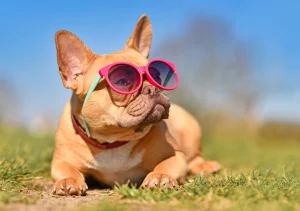
Next up, we have the French bulldog. These pint-sized bulldogs are like little bundles of joy, complete with perky bat ears that could make you melt on the spot. Frenchies are known for their playful and affectionate nature, making them fantastic companions for families or solo adventurers. Plus, their snorting and snuffling noises are enough to brighten anyone’s day. They have a sparky personality, strong will, and all that in a small body! They grow up to 13 inches but make up for size with a great temperament!
Origin and Facts
Despite the name, French Bulldogs actually originated from English Bulldogs. In the 1800s, small toy-sized Bulldogs were bred in England and became popular with lace workers. When many lace workers moved to France for work, they brought their little “bulldogs” along. The French fell in love with these miniature Bulldogs and refined them into a distinct breed. That’s how the Bouledogue Français was born. They added the trademark bat ears (which English breeders initially disapproved of, favoring “rose” ears).
By the late 19th century, Frenchies were fashionable in Paris, often seen accompanying ladies of society. The breed eventually spread to America and worldwide. Today, French Bulldogs have “solidified themselves as America’s sweetheart” according to the AKC, and their popularity shows no sign of slowing down.
Alapaha Blue Blood Bulldog
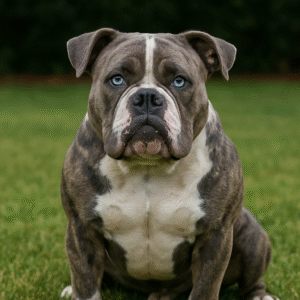
Now for a breed with a unique name and a proud Southern heritage: the Alapaha Blue Blood Bulldog. The Alapaha (pronounced “Al-uh-puh-HA”) hails from Georgia in the United States. The name “Alapaha” comes from the Alapaha River region. And “Blue Blood” was added to give the breed an aristocratic flair (despite being a working farm dog). Locals often simply call them “Otto” bulldogs, after a prominent foundation dog named Otto.
Now for a breed with a unique name and a proud Southern heritage: the Alapaha Blue Blood Bulldog. The Alapaha (pronounced “Al-uh-puh-HA”) hails from Georgia in the United States. The name “Alapaha” comes from the Alapaha River region. And “Blue Blood” was added to give the breed an aristocratic flair (despite being a working farm dog). Locals often simply call them “Otto” bulldogs, after a prominent foundation dog named Otto.
Origin Facts
The Alapaha Blue Blood Bulldog is essentially a rare American bulldog-type that was developed in the South. After the Civil War, plantation Bulldogs in the South largely disappeared, but some old Southern families maintained their own bulldog lines.
One such line was kept by the Lane family in Georgia, and a dog named Otto (who saved a family member’s life, according to lore) became the start of the modern Alapaha breed. The breed was named and formalized in the 1970s by Lana Lou Lane, who wanted to preserve these “old timey” bulldogs.
The term “Blue Blood” was added just to denote their pure, noble bloodlines (a bit of marketing flair!). They remain a rare breed – not recognized by AKC, but they have their own registry and are recognized by some smaller kennel clubs. Devotees love that they are an all-American breed with old Bulldog roots.
Australian Bulldog (Aussie Bulldog)
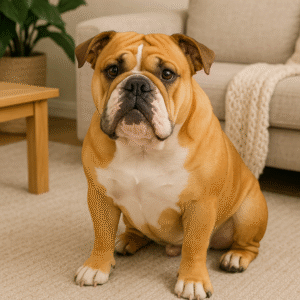
As the name suggests, the Australian Bulldog was developed Down Under. Also known simply as the Aussie Bulldog, this breed emerged in the 1990s as Australian breeders sought a bulldog suited to the Australian climate and lifestyle. Think of the Aussie Bulldog as a cousin to the English Bulldog, but a bit more heat-tolerant and active.
Aussie Bulldogs are described as affectionate, loyal, and intelligent. They are family-oriented dogs who love being part of the action at home – they’ll follow you room to room, just to be near. They generally adore children and are sturdy playmates. Compared to English Bulldogs, Australian Bulldogs can handle exercise and outdoor time better.
Origin Facts
Two main breeding programs in Australia led to what we now call the Australian Bulldog. One was by Noel and Tina Green, and another by Pip and Dee Braddon in the 1990s. They aimed to eliminate some of the health problems found in English Bulldogs and create a dog fit for Australia’s warmer weather.
By introducing other bull breeds into the lines, they succeeded in creating healthier puppies while keeping the bulldog look. The Aussie Bulldog is not yet recognized by major kennel clubs like the AKC, but there are breed clubs in Australia dedicated to its promotion. Enthusiasts say these bulldogs were bred by Aussie families, for Aussie families – emphasizing their role as companions.
American Bulldog
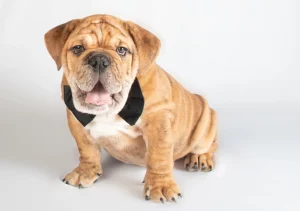
Moving on to the American bulldog, we find ourselves in the presence of a true athlete. These bulldogs have the will and love for sports and activities and are very loyal! With their sturdy build and fierce determination, they make excellent guard dogs. Just don’t let their tough exterior fool you – they have hearts of gold beneath those bulging muscles. Also, American bulldogs are not as small as their relatives from France or England! They can grow up to 30 inches and are quite intimidating to see, but don’t worry, they are like playful children – goofy and lovable!
American Bulldogs are confident, courageous, and extremely loyal to their families. They often think they’re lap dogs despite their size – don’t be surprised if your 100-pound bulldog tries to climb into your lap for cuddles! They are typically great with children and can be very gentle and affectionate with their people. However, they also have strong protective instincts. American Bulldogs were historically farm guardians and catch dogs (used to catch and hold livestock), so they are alert and brave. Early socialization and training is key, as these dogs are powerful and energetic. With proper guidance, they make loving family pets who will happily romp in the yard or lounge at your feet.
Origin and Facts
The American Bulldog is a direct descendant of the original bulldogs brought by working-class immigrants to the American South in the 17th–18th centuries. While the breed in England was heading toward show and companionship, the bulldogs in rural America kept doing their traditional jobs – farm work, hunting feral pigs, and guarding property. By the mid-20th century, American Bulldogs nearly vanished; after World War II, the breed was on the verge of extinction.
Thankfully, a few dedicated breeders (most famously John D. Johnson and Alan Scott) scoured the South for the remaining bulldogs and worked to revive the breed. They succeeded, and today’s American Bulldog descends from those revived bloodlines. There are actually a couple of types: the Johnson type (also called “Bully” type – larger, more bully-looking) and the Scott type (often a bit smaller, more agile). Most modern American Bulldogs are a blend of the two. The United Kennel Club recognized the breed in 1999, and the AKC has it in their Foundation Stock Service (a step toward full recognition) since 2019.
Olde English Bulldogge breed
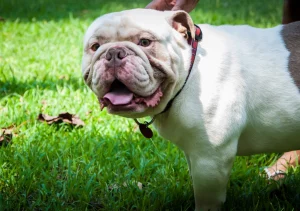
When we say bulldog, we can’t skip past the Olde English Bulldogge. Unlike its more refined English cousin, this breed takes a step back to its roots! The idea was to revive the bulldog breed to resemble those tough bull-biting dogs from centuries ago! They still have that signature wrinkled face but with a little extra muscle and athleticism. Olde English Bulldogges are adventurous, outgoing, and always up for a good play session.
This breed was created in the 1970s by an American breeder, David Leavitt, who wanted to “recreate” the healthier, athletic bulldog of the early 19th century. The idea was to have a bulldog with the looks of the old-time bulldog but without the extreme physical traits of the modern English Bulldog. To achieve this, breeders crossed English Bulldogs with other breeds like the American Bulldog, Bullmastiff, and Pit Bull Terrier. The result is the Olde English Bulldogge (often abbreviated as OEB).
Origin Facts
The “breed” is a modern re-imagining of the old bulldog. By combining various bull-breed genetics, breeders like Leavitt managed to eliminate some of the extreme traits. The Olde English Bulldogge project started around 1971 and over the decades has become established enough that some kennel clubs (like the UKC) now recognize it as a distinct breed.
Interestingly, because it’s a healthier bulldog, OEBs often have a longer lifespan – some live 11–13 years, which is notably longer than the average English Bulldog (many of which struggle to reach 10). They also often can whelp (give birth) naturally, whereas English Bulldogs frequently need vet assistance due to puppy size.
Bull Mastiff breed
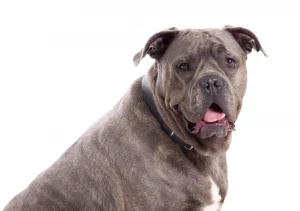
The power dog, created from Mastiff and Bulldog breed crossing, is one of the biggest in the breed varieties! They can grow up to 35 inches and gain 120 pounds! That is a massive and serious dog, but don’t let their size fool you! They can be intimidating but are very friendly, and they love socializing! They are also pretty smart, easy learners, and can be easily trained since they are not as stubborn as their relatives! Still, they do have one difference from their English bulldog relatives and other ones – they have shorter life spans! English bulldog lifespan, for example, is 12 to 14 years, and Bull Mastiff can live up to 9 years!
Victorian Bulldog
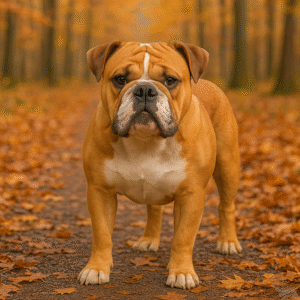
The Victorian Bulldog is another attempt to turn back the clock to healthier bulldogs – with a nod to history in its name. This breed was developed in the 1980s (not the Victorian era, despite the name) by crossing English Bulldogs with Bull Terriers, Bullmastiffs, and Staffordshire Bull Terriers. The goal was to create a bulldog that resembles the dogs from Victorian paintings – slightly taller, with a longer muzzle, and fewer health issues than the modern show bulldog.
Victorian Bulldogs are similar in appearance to English Bulldogs but are a bit taller and leaner. Males stand about 17–19 inches at the shoulder. They have a larger snout and fewer wrinkles, meaning their face isn’t as extremely flat. This gives them a less squished look and indeed helps with breathing. They’re still solid and muscular, usually weighing 55–75 pounds. Coat and colors are like other bulldogs (seen in white, brindle, fawn, etc.).
Origin Facts
The breed’s creation is often credited to breeder Ken Mollett in England. By using a mix of bull breeds, he aimed to recreate the Bulldog as it existed in 19th-century England – before exaggerations were bred in. The result was the Victorian Bulldog. While not officially recognized by major registries like AKC, they are recognized by some minor kennel clubs and breed clubs. The Continental Kennel Club (CKC), for instance, recognizes Victorian Bulldogs in their bull breeds group. They remain a relatively rare breed, but have a devoted following of people who appreciate a healthier bulldog.
What Are The Oldest Bulldog Breeds?
Bulldogs as a type have a long history, so pinpointing the single “oldest” bulldog breed can be tricky. However, a few contenders stand out when we talk about ancient origins:
Dogue de Bordeaux
Often cited as one of the oldest French breeds, the Dogue’s lineage may date back over 600 years or more. It was around “before France was France,” as some say. Its old role as a war dog and castle guard make it a strong candidate for an ancient bulldog breed.
Alano Español
The Spanish Bulldog has roots that potentially trace to dogs of the 5th century brought by the Alani people. There was written mention of “Alan” dogs in Spain by the 14th century for hunting and bull-baiting. That gives it a very old pedigree, even though it was only recently revived as a formal breed.
Old English Bulldog (extinct)
We can’t forget the original bulldog of England, used in bull-baiting. While not around today, this breed existed at least as far back as the 1500s. The modern English Bulldog is its descendant. So indirectly, the English Bulldog carries that legacy and could be considered the oldest if we follow the lineage.
Bulldog Breeds General characteristics
Even though every bulldog breed has its own unique traits and characteristics that we all love and cherish, they have some similarities due to their genetic bond!
- Stubbornes – oh, for the love of Dogs, these breeds can be really hard-headed and stubborn beyond limits! That is why some breeds have problems in training or can be very hard to learn basics! Still, with good guidance, strong will, and persistence – you and your bulldog will get on the same page, and you will have and great doggo with a great attitude!
- Wrinkly faces and short snouts! Since wrinklyness are the special trait that follows all breeds of bulldogs in the world, you should know a few things about that! You must take special care of wrinkles and keep them clean to avoid skin and health problems! Short or shorter snouts are also the genetical trait for bulldogs, but for older kids, it was not as short as it is for French or English bulldogs! This may cause respiratory problems, but it is nothing that your Vet can’t take care of!
- Love, loyalty, and affection – Bulldog breeds are very loyal to their family; they are full of love for their humans and won’t miss a chance for a nice snuggle or belly rub! They are like big babies that love your attention, but they will give you so much more affection than you could ever give them!
So, we’ve scratched the surface of this wonderfully diverse world of bulldog breeds. Each variation brings its own distinctive traits and undeniable charm. No matter which bulldog breed steals your heart, one thing is for sure – their unwavering loyalty and love will make your life a whole lot more entertaining, drool-filled, and, of course, endlessly joyful.






 English Bulldog Jackets & Coats
 English Bulldog Hoodies
 English Bulldog Sweaters
 English Bulldog Life Jackets
 English Bulldog Costumes
 English Bulldog Shirts










One thought on “How Many Bulldog Breeds Are There?”