
Bulldogs and Kids: Safety Tips Every Parent Should Know


Bulldogs and kids can be a great combination in many families, especially since bulldogs are known for their calm nature. It’s not about “trusting the breed,” it’s about supervision, kids’ rules, dog rules, and smart routines. If your bulldog is showing signs of stress like freezing, stiffening their body, or growling, it’s time to slow down and seek professional help.
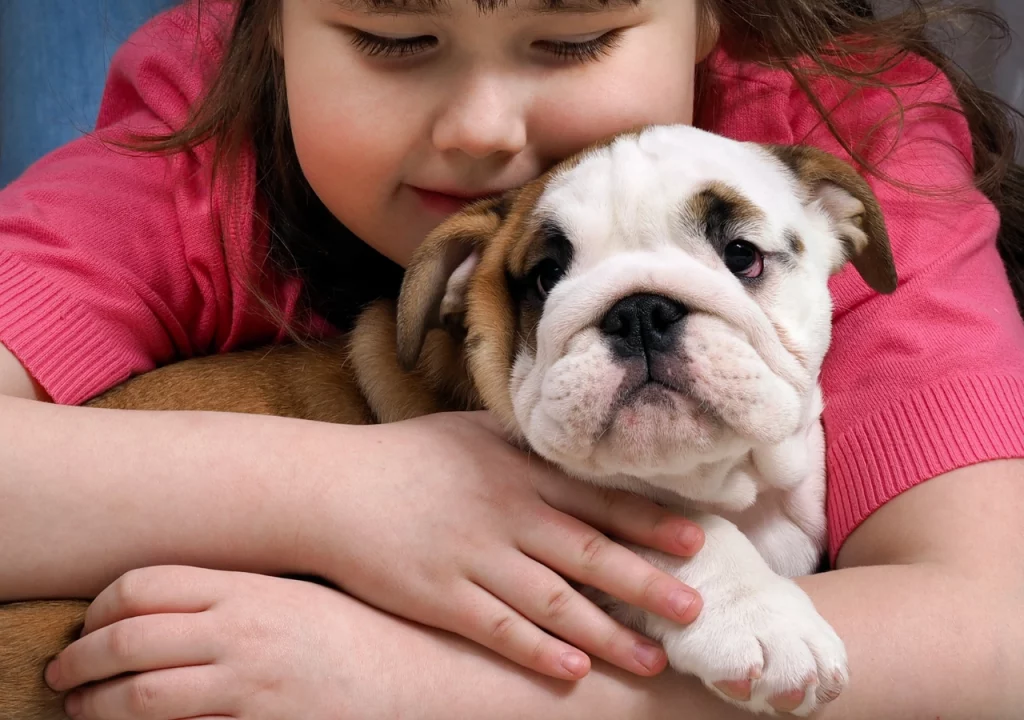
Why “Bulldogs and Kids” Can Work So Well (And When It Doesn’t)
They’re described as affectionate, stable companions, and families adore how “close to the couch” they can be. This relaxed nature may be a boon in a household with kids—especially compared to other breeds that demand non-stop exercise.
But let’s get real: every dog has the potential to bite if they’re stressed, hurt, cornered, or consistently ignored. When we discuss bulldogs and kids, we’re really talking about:
- how well the dog is socialized and trained
- how the child behaves around the dog
- what routines you set up (food, rest, space, supervision)
- the dog’s health and comfort (pain changes behavior fast)
That’s why this guide is mostly about systems and real-world habits—the stuff that actually keeps kids safe.
My Real-Life Experience With Bulldogs and Kids
I’ve seen Bulldogs handle gentle kids beautifully, especially when the children understand basic rules (no grabbing, no face-to-face hugs, no bothering the dog while eating or sleeping). I’ve also seen the opposite: a Bulldog that looked “fine” until a child ran at them, leaned over them, or tried to take a toy—then suddenly the dog froze and the vibe changed instantly.
If you remember one thing from this blog: the freeze is not “calm.” It’s often the dog’s last quiet warning before things escalate.
The #1 Rule: Supervision Is Non-Negotiable
When kids are involved, the safest mindset is:
“If I can’t see both of them, I separate them.”
That’s not dramatic. That’s how accidents don’t happen.
What “supervision” actually means
- You’re close enough to intervene in 1–2 seconds
- You’re not distracted by your phone, cooking, or a long conversation
- You can clearly see the dog’s face and body (not just the child)
When you can’t supervise: use baby gates, a crate (if crate-trained), or separate rooms.
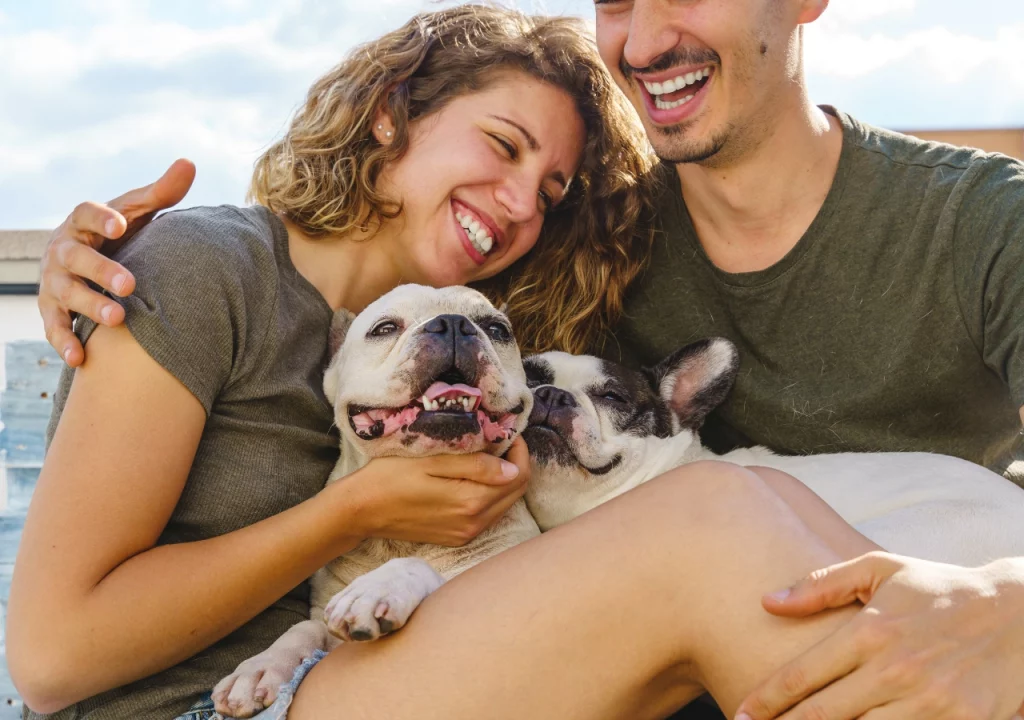
Bulldogs and Kids by Age: What Changes?
Babies (0–12 months)
Main risks: sudden noises, startling touches, parents being too tired to supervise
Best setup: gate + “dog-free baby zone” and “baby-free dog zone”
Safe habits:
- keep the dog out of the nursery unless fully supervised
- never allow sniffing near the baby’s face
- reward calm behavior around baby sounds (crying, squeals)
Toddlers (1–3 years)
This is the highest-risk stage because toddlers are unpredictable.
Main risks: grabbing, falling on the dog, hugging, squealing, chasing
Best setup: 2-zone home layout (gates) + “place” training
Non-negotiable toddler rules:
- no hugging, no kissing
- no touching the dog’s face
- no climbing on the dog
- no running at the dog

Kids 4–7 years
Kids can learn routines and understand “stop” and “space.”
Best approach: teach kids to “invite” the dog and to stop the moment the dog moves away.
Kids 8+ years
This is the stage where kids can help with training—under adult guidance.
Bulldog Body Language: The Signs Most Families Miss
If you want bulldogs and kids to coexist safely, you have to learn the dog’s “quiet language.” Bulldogs aren’t always dramatic about stress.
Early stress signals (pay attention now)
- turning head away (avoidance)
- lip licking when there’s no food
- yawning when not sleepy
- sudden sniffing the ground (displacement behavior)
- stepping away and trying to leave
“Stop right now” warning signs
- stiff body, tense face
- freezing (the big one)
- showing the whites of the eyes (“whale eye”)
- low growl, hard stare, raised lip
- repeated attempts to move away but being followed
What to do:
Separate calmly, lower the chaos, give the dog space, and adjust the environment. Don’t punish growling—growling is information.
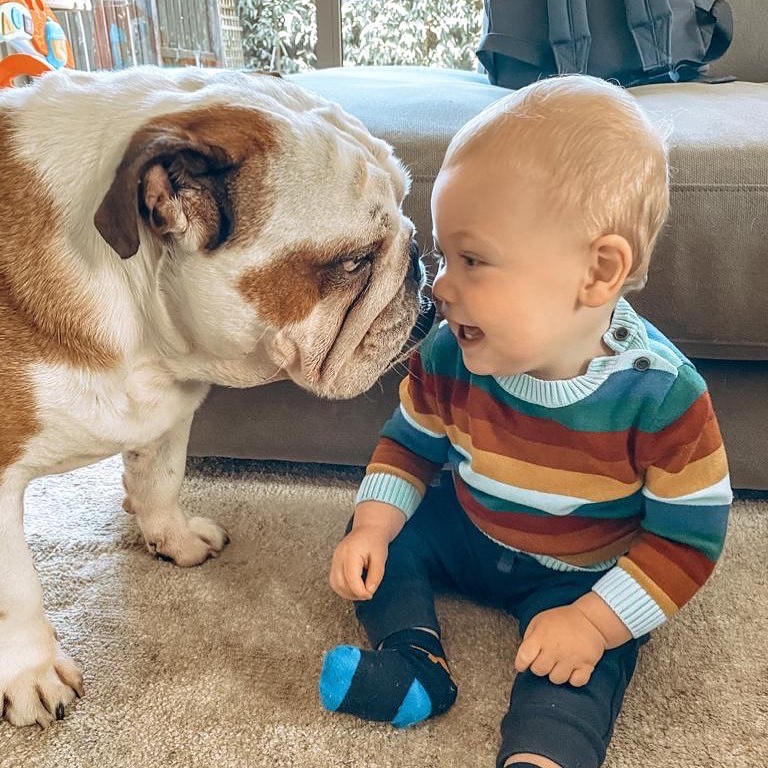
The House Rules That Make Bulldogs and Kids Safer Overnight
These rules prevent most bite incidents in family homes.
1) No touching the dog while eating
Food is a common trigger for guarding in many breeds—including Bulldogs. Feed separately and teach kids: hands off during meals. No dog loves to be interrupted while eating.
2) No waking a sleeping Bulldog
Sleep is sacred. A startled dog can react reflexively.
3) No taking toys or chews
Teach “trade” instead:
- kid calls an adult
- adult trades for a treat
- toy gets put away
4) No face-to-face interaction
Kids love faces. Dogs don’t always. Teach side-to-side petting and calm voices.
5) The Bulldog must always have an escape route
If a dog can’t move away, stress rises.

A Simple Safety Setup for Any Home (No Fancy Stuff Needed)
Here’s a system I love because it’s realistic:
The 2-Zone Layout
- Kid zone: play area
- Dog zone: bed + water + chew toys + calm space
Use gates to separate when needed.
The “Place” Routine (life-changing for families)
Teach your Bulldog to go to a mat/bed and stay there while:
- kids run around
- visitors arrive
- meals are being prepared
- excitement levels are high
Reward calm. Keep sessions short. Bulldogs learn best with consistent routine and high-value treats.
How to Introduce Bulldogs and Kids the Right Way
If you’re bringing a Bulldog into a home with kids
- Meet in a calm environment (outside if possible)
- Keep the child quiet and sideways—not leaning over the dog
- Reward the dog for calm curiosity
- End on a good note, before the dog gets tired or overstimulated
If you’re bringing home a baby
- play baby sounds quietly before the baby arrives
- keep the dog’s routine steady
- reward calm behavior near baby-related noises and smells
- never force interaction
Common Accident Scenarios (And How to Prevent Them)
Scenario 1: Toddler runs and screams → Bulldog gets overwhelmed
Fix: gates + “place” training + calm breaks
Scenario 2: Child hugs Bulldog → dog freezes → adult thinks it’s “cute”
Fix: teach “hands off the face” and stop hugs completely
Scenario 3: Child approaches dog during meals
Fix: separate feeding area + clear rule + visual cue (gate closed)
Scenario 4: Kids on the floor with dog + toys everywhere
Fix: no floor wrestling; keep dog in dog zone during high-energy play
Are Bulldogs Aggressive With Kids?
Most Bulldogs are not “naturally aggressive,” but temperament varies by individual, and behavior changes with:
- pain (hip, joint, skin issues, ear infections)
- poor socialization
- repeated stress without breaks
- kids ignoring boundaries
- resource guarding around food/toys
- rough handling
If your Bulldog suddenly becomes snappy, tense, or avoids touch, book a vet check first. Pain is a common hidden trigger.
When to Get Professional Help
Reach out to a qualified trainer or behavior professional if you see:
- growling around kids or toys
- freezing or stiffening when kids approach
- snapping “out of nowhere”
- repeated hiding or avoidance
- guarding food, chews, or sleeping spots
- your child is fearful of the dog (or vice versa)
Early help is easier than “waiting to see.”
A Practical Daily Routine for Bulldogs and Kids
If your home feels chaotic, try this:
Morning
- quick potty + short walk
- calm cuddle time (adult-led)
- breakfast separate from kids
Midday
- chew toy in dog zone
- kid play in kid zone
- 5-minute “place” practice
Afternoon
- gentle interaction: “pet the dog’s shoulder, not face”
- quiet enrichment (snuffle mat, slow feeder)
Evening
- second short walk
- family time: Bulldog on mat, kids on couch
- bedtime: dog sleeps undisturbed
This routine reduces surprise interactions—the real danger with kids.
FAQ: Bulldogs and Kids
Are Bulldogs good with kids?
Many are, especially when they’re well-socialized, and the household uses supervision + boundaries. Calm routines matter more than breed stereotypes. If your bulldog barks, growls, and becomes stiff when is around your kids, then you should take a few steps back.
Can Bulldogs bite children?
Yes—any dog can. Prevention comes from supervision, teaching kid rules, and giving the dog space during meals, sleep, and high excitement.
Should I let my child hug my Bulldog?
No. Hugging is a common trigger because many dogs interpret it as pressure or restraint. Teach gentle side petting instead.
What if my Bulldog growls at my child?
Treat it as important information. Separate, review what happened (food, toy, cornered, tired), and get professional support if it repeats. Don’t punish the growl.
Do Bulldogs get jealous of babies?
Some bulldogs have difficulties with change and attention shifts. That’s why it’s important to have a stable routine, be rewarding, and never force bulldogs to interact. If your bulldog is uncomfortable with your child, their friendship will develop slowly. Jealousy in bulldogs can be induced if you stop paying attention to your dog. Just like any other family member, your bulldog should still take a special place in your family.
What is the safest way of dealing with bulldogs and toddlers?
To ensure safety, baby gates, clear areas, supervision, and separation of face-to-face contact, hugging, and food/toy conflicts must be employed. This is very important, especially from the time your new member of the family comes home. Bulldogs, especially in the early stages, can be very possessive. It is very important to ensure that your bulldog learns to share not just with humans but also with other things.
Living with Bulldogs and Kids: Are They A Good Match?
If you want bulldogs and kids to be a good match, then you must ensure safety. You must never rely on luck or assume that your bulldog is too sweet to react. You must ensure supervision, home design, kid rules, and a bulldog with enough space to rest. The main objective is to ensure there is a reduction in risky moments. This is precisely what routines ensure: a calm bulldog, a safe child, and a life with bulldogs and kids that is easy, not stressful.



 English Bulldog Jackets & Coats
 English Bulldog Hoodies
 English Bulldog Sweaters
 English Bulldog Life Jackets
 English Bulldog Costumes
 English Bulldog Shirts