

English Bulldog Coat Colors: From Standard to Rare Coat Varieties

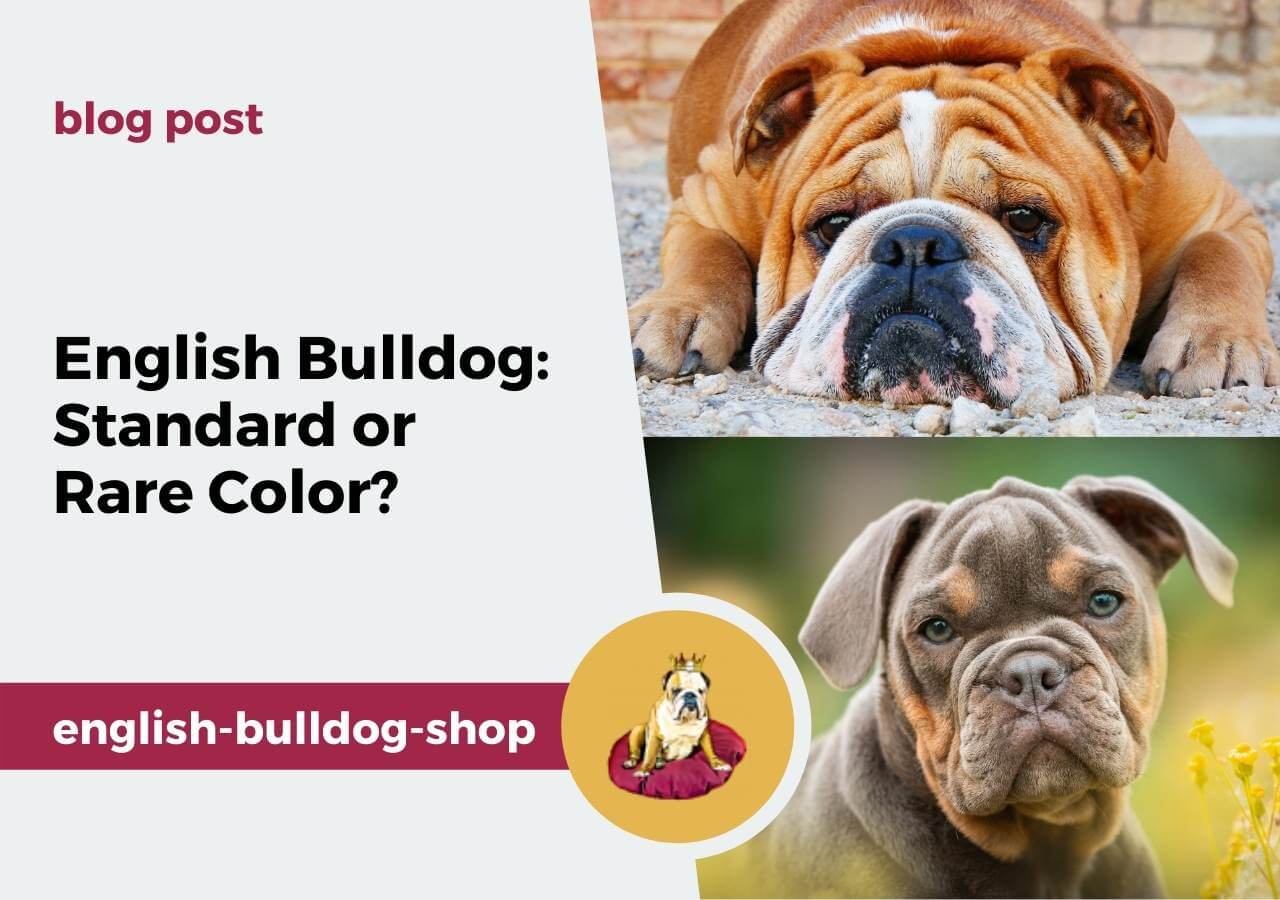
English Bulldogs come in a rainbow of coat colors – from the classic hues you see in the show ring to exotic shades breeders call “rare.” In this article we’ll explore the standard Bulldog coat colors recognized by major kennel clubs and what they look like, then dive into the rare English Bulldog colors (like lilac, merle, blue, and chocolate) including how these unique coats are produced genetically and how they appear.
We’ll also discuss health issues in rare Bulldogs (for example, problems linked to the merle gene or color-dilution genes) and break down current Bulldog color prices– highlighting how much more you might pay for a rare color. Along the way, we’ll share expert opinions from breeders and note what kennel clubs say about non-standard colors (hint: many are not eligible for shows).
Standard English Bulldog Coat Colors
Major kennel clubs like the AKC (American Kennel Club) and Bulldog breed clubs recognize only a handful of coat colors as “standard” for English Bulldogs. These standard colors are the classic ones you’ll see in reputable breeding programs and dog shows. According to the breed standard, the acceptable coat colors are red, white, fawn, fallow, or any combination of these (often with patterns like brindle or piebald). In practice, that includes common colors such as:
Solid White English Bulldog
A pure white coat (sometimes called “platinum”). In reality, completely solid white Bulldogs are rare; most have a small patch of color. Up to 10% of the coat can be another color and the dog is still considered white. White Bulldogs might have markings like a black mask or patches of fawn.
Red English Bulldog
A rich, reddish-brown coat that can range from light ginger to a deep mahogany red. Red Bulldogs always have black pigmented noses, eye rims, and paw pads (distinguishing them from chocolate Bulldogs, which have brown pigment). Red often appears in combination, e.g. red and white or red brindle.
Fawn (Fallow)
A light tan or beige coat, varying from a pale yellowish-tan to a darker reddish fawn. Fawn Bulldogs typically have black noses and dark eyes. (Fun fact: “Fallow” is an old term for a pale fawn color, used in early Bulldog standards.) Fawn can be solid or paired with white, and some may call a very light fawn fallow.
Brindle English Bulldogs
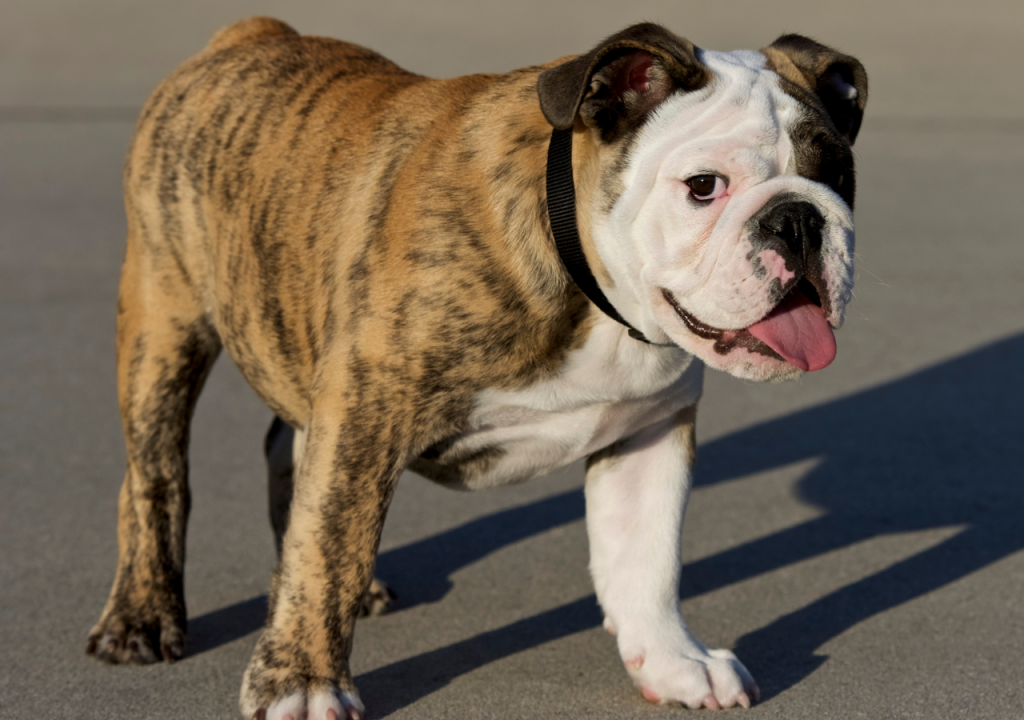
Technically a pattern, but it’s a quintessential Bulldog look. Brindle Bulldogs have dark striping over a fawn or red base coat, creating a “tiger stripe” effect. You’ll see combinations like red brindle (red base with black stripes) or fawn brindle. Brindle can cover the whole body or just parts of it, often with white patches (brindle pied). It gives a striking, richly patterned coat that many Bulldog lovers consider classic.
In a nutshell, a Bulldog’s coat can be any mix of red, white, and fawn. Brindle striping, piebald spotting (large patches of two colors), and slight ticking (freckles of color) are common and permitted patterns. A black mask (dark muzzle) or black tipping on the hairs is also acceptable on these standard colors. For example, a fawn Bulldog might have a black mask, or a red brindle might have black hair tips.
What’s not allowed?
The breed standard explicitly disqualifies any color or marking outside those listed. In fact, it states “All other colors or markings are a disqualification” for show purposes. This means that English Bulldogs with coat colors like black, blue, chocolate, lilac, or merle are not recognized in the show ring – they fall outside the traditional standard. The merle pattern is specifically called out as disqualifying. So, while you can register a Bulldog of a non-standard color with the AKC (if its parents are registered), it cannot compete in conformation shows and is considered “non-standard” by breed clubs.
Major kennel clubs take a strict stance: for example, the UK Kennel Club will not even accept registration of merle Bulldogs (since merle isn’t a naturally occurring color in the breed), making merle pups ineligible for official shows. In short, the classic reds, whites, and fawns rule the show ring, and anything else is off the standard palette.
Rare and Non-Standard English Bulldog Colors
Outside of the familiar standard colors, you might encounter “rare” English Bulldog colors being advertised. These exotic hues – lilac, blue, chocolate, black, and merle among others – have exploded in popularity over the past two decades. They’re eye-catching and often come with equally eye-popping price tags. However, it’s important to note that these colors are not recognized by most major kennel clubs for showing, and they usually arise from specific genetic combinations (sometimes even introduced by crossbreeding with other breeds). Let’s look at the most well-known rare Bulldog coat colors, how they’re produced genetically, and what they look like:
Black and Black Tri-color
A black Bulldog has a solid black coat (often with some white markings) and black pigment (black nose, eye rims, paw pads).
Solid black is very uncommon in English Bulldogs, and many “black” dogs are actually dark seal or brindle. Usually, if you see black, it’s in a pattern like black pied (black patches on white) or black tri. Tri-color Bulldogs have three colors: typically black, white, and tan. A black tri Bulldog is mostly black with white on the chest/face and tan points on the eyebrows, cheeks, and legs (similar to a Doberman or Rottweiler pattern). These tan-point tricolors result from the at gene for tan points, which Bulldogs in standard colors don’t normally show.
Black tri Bulldogs are striking, but remember, any black-based coat was historically undesirable in the show world. In fact, early breeders considered black/tan Bulldogs too closely linked to old fighting lines and bred away from them – which is partly why black is rare today.
Blue English Bulldog
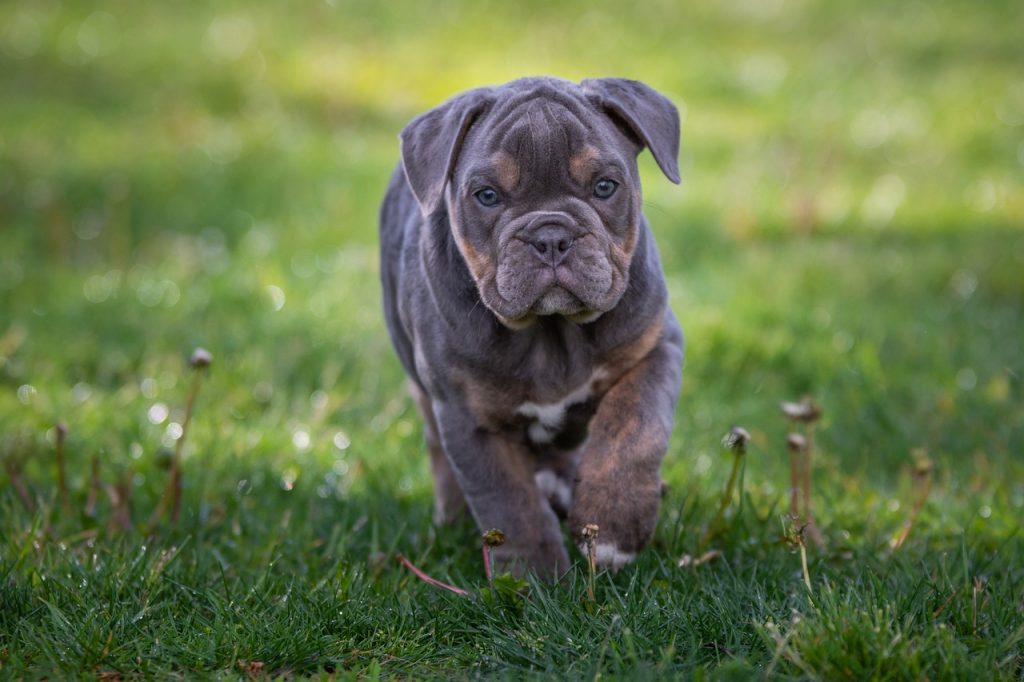
Bulldogs with a blue coat have a diluted black gene (dd), creating a grayish, steel-blue shade. These Bulldogs have blue noses, paw pads, and eye rims, which clearly set them apart from standard colors. However, blue Bulldogs can face skin allergies and alopecia (hair loss) due to dilution genes.
Chocolate English Bulldog
A chocolate English Bulldog sports a rich, warm brown coat due to the chocolate (bb) gene. Their noses, eye rims, and paw pads are also chocolate-colored. Chocolate Bulldogs are stunning but may be susceptible to similar skin issues as blue Bulldogs.
Lilac English Bulldogs
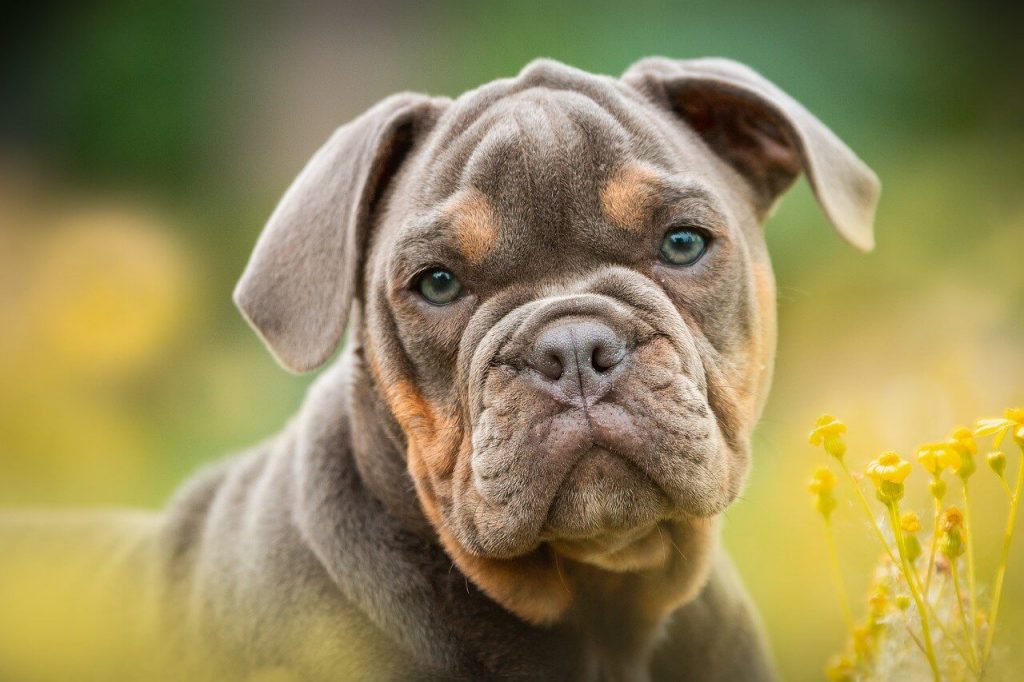
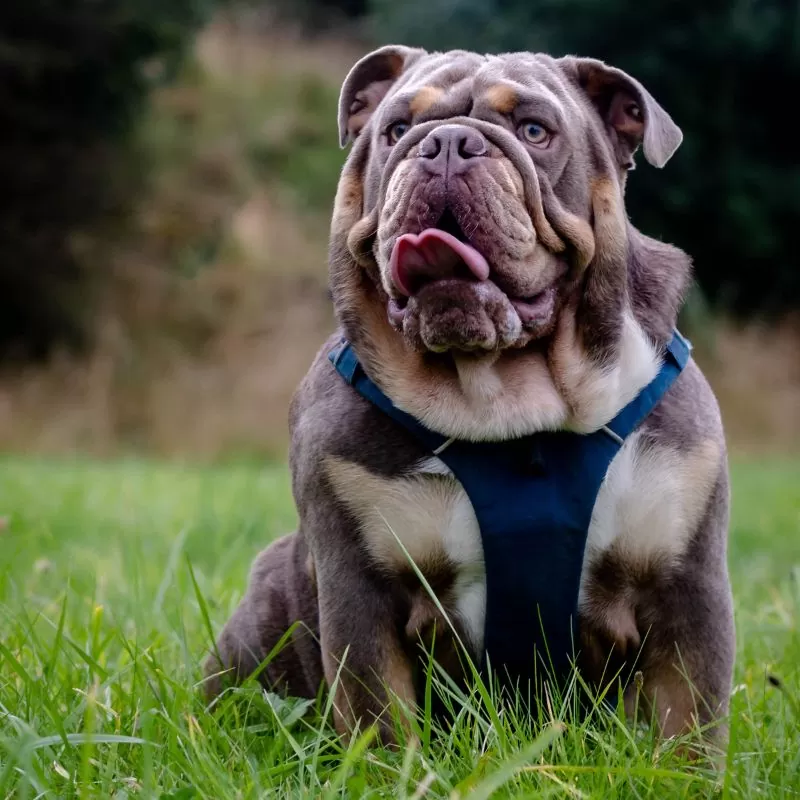
Lilac Bulldogs are incredibly rare, combining blue and chocolate genes (dd, bb). The result? A soft lavender or silver-toned coat with stunning green or blue eyes. Lilac is currently the rarest and most expensive English Bulldog color, with puppies often priced between $8,000 and $15,000 or even more for unique markings or pedigrees.
Merle English Bulldogs
Merle Bulldogs have a distinctive mottled or marbled coat pattern created by the merle gene. This striking pattern can appear on various coat colors. However, Merle Bulldogs often carry significant health risks, including deafness, vision impairment, and neurological issues, especially if bred improperly (e.g., two merles bred together).
Health Issues Associated with Rare Bulldog Colors
Rare coat colors aren’t just about aesthetics—some can bring health complications:
- Merle Bulldogs: Often suffer from congenital deafness and vision defects.
- Dilute Colors (Blue and Lilac): Prone to skin problems, including allergies and color dilution alopecia, resulting in thin or patchy coats.
Veterinarians and responsible breeders typically advise caution when choosing Bulldogs in these rare colors, stressing health and temperament over color trends.
Bulldog Prices: Standard vs. Rare Colors (2024–2025)
Here’s a quick comparison of average Bulldog prices:
| Coat Color | Average Price |
| Standard (Red, Fawn, White, Brindle) | $2,500 – $4,000 |
| Black or Black Tri | $4,000 – $7,000 |
| Blue or Chocolate | $5,000 – $8,500 |
| Merle | $6,000 – $10,000 |
| Lilac (Rarest) | $8,000 – $15,000+ |
What Kennel Clubs and Breeders Say
Most major kennel clubs, including the AKC and UK Kennel Club, do not recognize rare colors like merle, lilac, blue, or chocolate for the show ring. Breeders’ opinions vary widely: some responsibly breed rare colors, emphasizing health and genetic testing, while others caution against breeding solely for color due to associated health risks.
As always, choosing your English Bulldog based on reputable breeders who prioritize the dog’s health and quality over color is essential.
What Is The Rarest English Bulldog Coat Color?
The rarest English Bulldog coat color currently is Lilac. Lilac Bulldogs have a unique, soft lavender or silver-toned coat, combined with distinctive green or blue eyes. This color occurs due to a combination of the chocolate (bb) and blue (dd) dilution genes, making it incredibly rare.
Because of their rarity, Lilac English Bulldogs are typically the most expensive, with prices ranging from around $8,000 to upwards of $15,000 or more, depending on their pedigree and markings.
Conclusion
Whether you’re drawn to the timeless elegance of standard coat colors or captivated by the rarity of exotic hues like lilac or merle, it’s essential to prioritize your Bulldog’s health and happiness above all. While rare colors can be eye-catching and unique, they often come with higher price tags and potential health concerns. Do your homework, ask plenty of questions, and choose breeders who put the well-being of their Bulldogs first. After all, the most beautiful thing about any Bulldog—standard or rare—is their lovable personality and heartwarming companionship.



 English Bulldog Jackets & Coats
 English Bulldog Hoodies
 English Bulldog Sweaters
 English Bulldog Life Jackets
 English Bulldog Costumes
 English Bulldog Shirts










One thought on “English Bulldog Coat Colors: From Standard to Rare Coat Varieties”