

Top 7 Merle English Bulldog Coat Colors (Varieties)

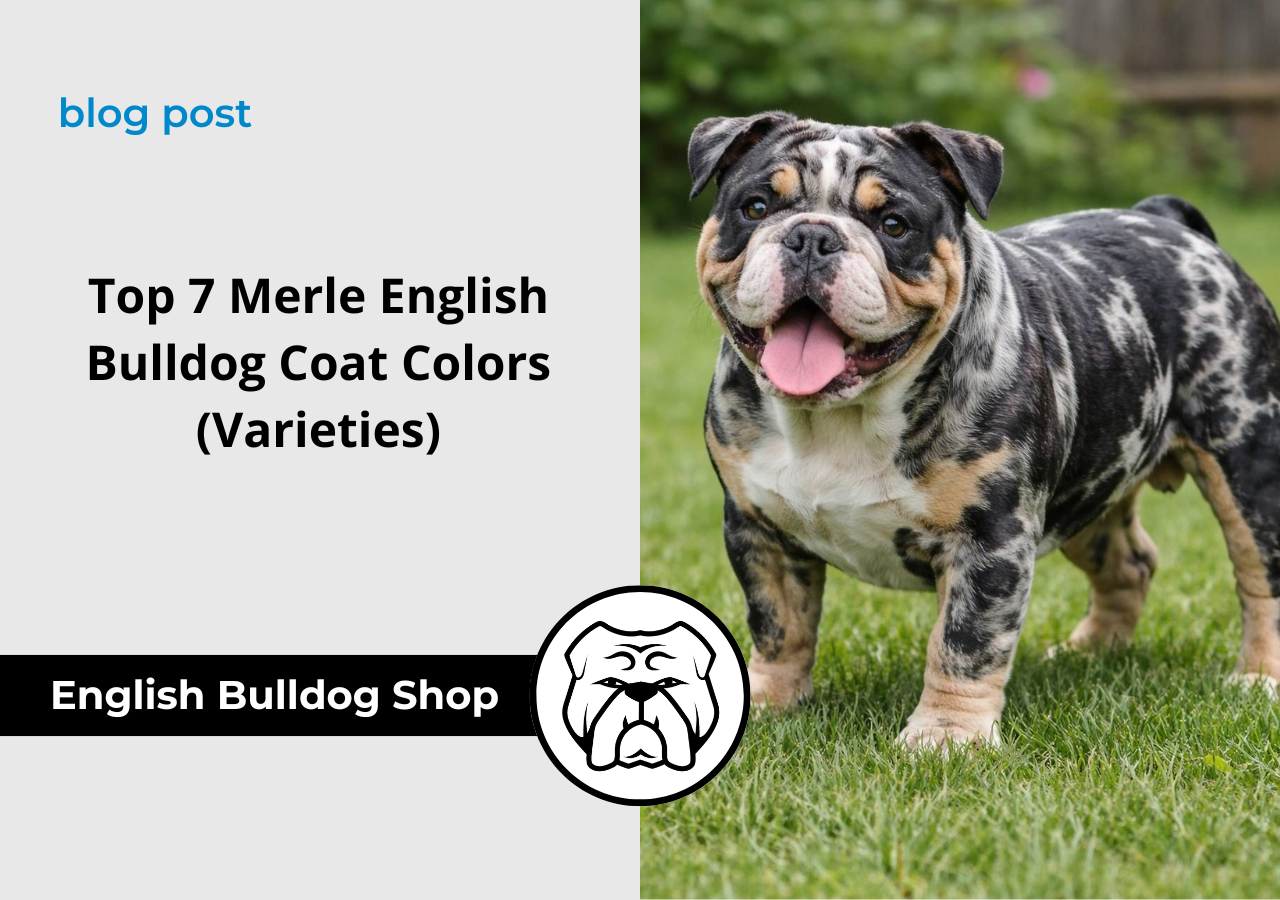
If you’re interested in buying a merle English bulldog, then you definitely need to know their coat color varieties. Merle bulldogs are one of the rarest and most expensive coat types in this breed. They require special breeding to produce a litter of healthy pups.
In this guide, I’ll break down the top 6 merle English Bulldog color varieties, explain what merle actually is, and put it into context next to standard English Bulldog colors and rare English Bulldog colors you’ll see online.
Quick takeaways (read this first)
- Merle is a pattern rather than a pure color. It gives the impression of marbled or mottled coloring in a background color.
- “Rare” English bulldog colors are market terms. Some of these colors are non-standard and may not be accepted by certain kennel clubs.
- The biggest red flag is not the color. It is how they breed this color, especially merle to merle.
- If thinking about getting a Bulldog, the temperament, structure, and breathing comfort are more essential than the popular color.
What “merle” means in English Bulldogs
Merle – This pigment pattern consists of patches of a diluted color combined with fully pigmented colors. This is the reason for the swirled, splashed, or marbled look of a merle coat. Expect to see:
- mottling of the body
- darker “islands” of color over a lighter background
- sometimes lighter eyes, or one blue eye (not necessarily so)
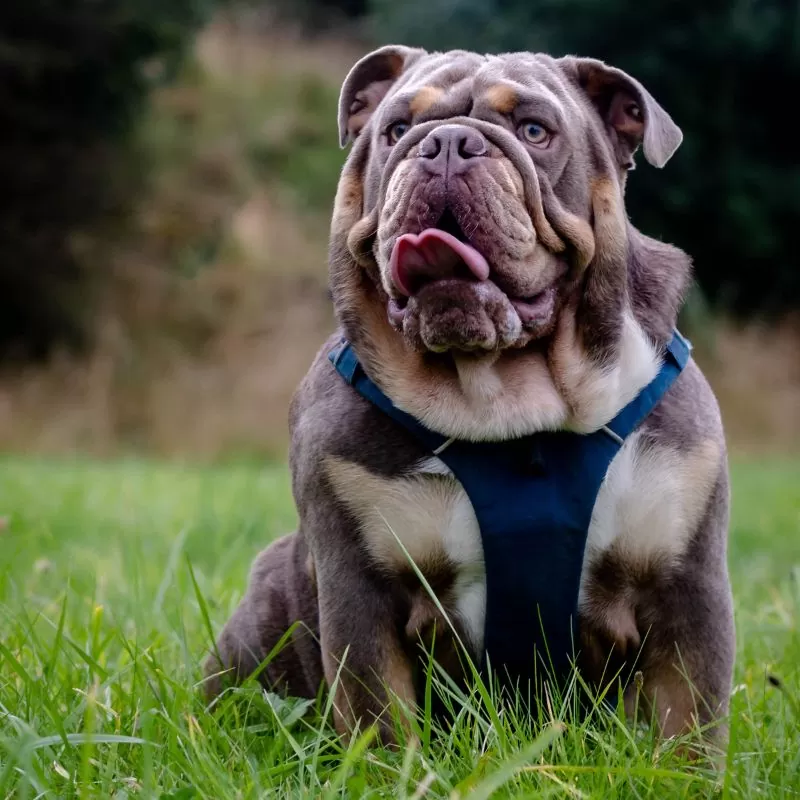
The most important thing that I teach readers is that “merle affects the distribution of pigment, but never changes the original color underneath. And that original color underneath is what provides us with labels such as…,”
- blue merle
- chocolate merle
- lilac merle
- red merle
- black merle
- tri merle
And because Bulldog marketing can get… creative, you’ll also see lots of extra labels attached (ghost merle, cryptic merle, etc.). Some of those terms describe subtle expressions of the pattern that are hard to spot without genetic testing.
Standard English Bulldog colors (what people usually mean by “standard”)
When owners say standard English Bulldog colors, they’re usually referring to colors/patterns commonly accepted in breed standards and widely seen in responsibly bred lines. You’ll most often hear:
- brindle
- fawn
- red
- white
- piebald (white with patches)
- combinations like red and white or fawn and white
You’ll also see plenty of Bulldogs with black mask shading, heavier brindle striping, or patches that change in intensity as the dog matures.
Why this matters: “Standard” typically aligns with predictable pigment and a long history of selection inside the breed. It doesn’t automatically mean “better,” but it often correlates with breeders who focus on type, structure, and temperament rather than novelty.
Rare English Bulldog colors (what’s “rare” — and why it’s tricky)
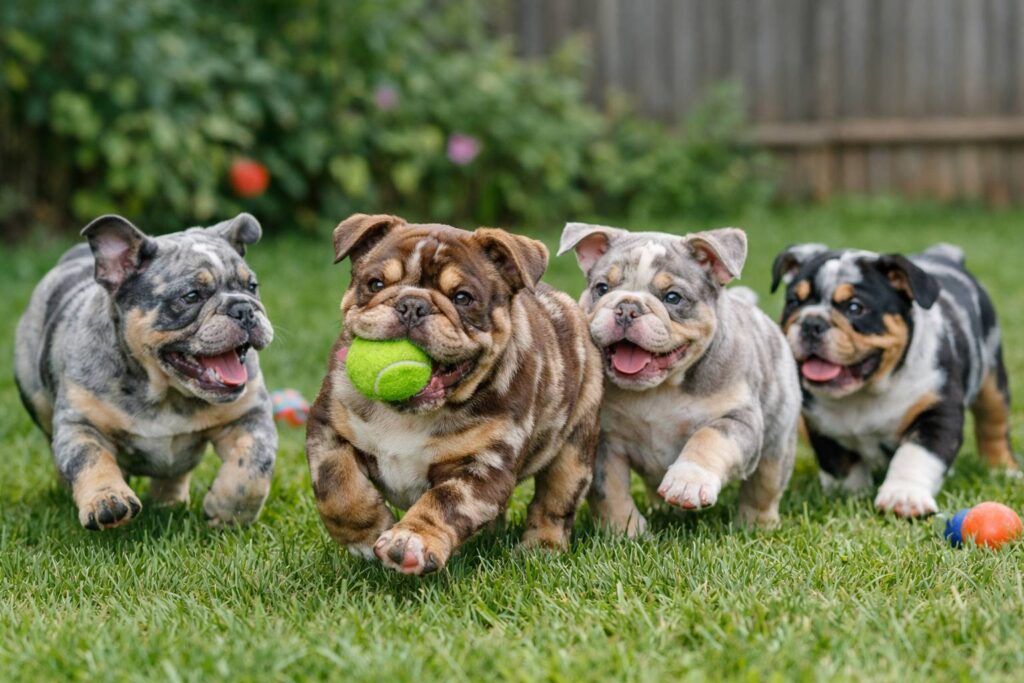
When people search rare English Bulldog colors, they’re usually looking at trendy shades such as:
- blue
- lilac
- chocolate
- merle
- tri-color
- sometimes black (in certain marketing circles)
Rare can simply mean less common in the general population, but it’s also used as a pricing lever. I’ve seen “rare” used to justify huge price jumps even when the breeder can’t show basic proof of quality (pedigree clarity, parent information, transparent testing, consistent care).
So treat the word rare as a signal to ask more questions, not a reason to buy faster.
Are merle English Bulldogs “recognized”?
This is where things get sensitive, so I’ll keep it factual and practical.
In many major breed standards, merle is not accepted for English Bulldogs. It means:
- a merle Bulldog may be excluded from conformation showing under those rules
- registration rules can vary by registry and country. If you want to
- “registered” does not always mean “well-bred” (and “not accepted for show” doesn’t automatically mean “bad dog”)
What I recommend: If a breeder tries to “dodge” this conversation or pressures you with buzzwords only (“AKC quality,” “rare exotic,” “top bloodlines”) but won’t explain details calmly, walk away. It’s often a sign that he/she works as a puppy mill and doesn’t put the puppy’s health in the first place.
Top 7 merle English Bulldog coat colors (varieties)
Before we go one-by-one, here’s a quick comparison table that helps buyers understand what sellers mean.
Merle variety comparison table
| Merle variety | Base pigment “look” | Typical overall vibe | Why it’s popular |
| Blue merle | gray/steel marbling | cool-toned, smoky | striking contrast in photos |
| Chocolate merle | brown marbling | warm, rich coat | “rare” marketing appeal |
| Lilac merle | pale taupe/gray-brown | soft, muted, pastel | often positioned as ultra-rare |
| Black merle | darker marbling | bold, high contrast | dramatic patterning |
| Red merle | reddish marbling | warm and bright | looks unique next to fawn/red Bulldogs |
| Tri merle | merle + tan points + white | “three-color” look | high demand due to novelty |
| Phatom Merle | Looks solid or almost solid; merling is extremely subtle and may be hard to spot in photos | “Hidden merle” — can appear non-merle, especially in low-contrast lighting | “non-merle” dogs can still carry merle genetics |
Now let’s break them down the way I would if you were sitting next to me, asking what you’re really looking at.
1) Blue merle English Bulldog
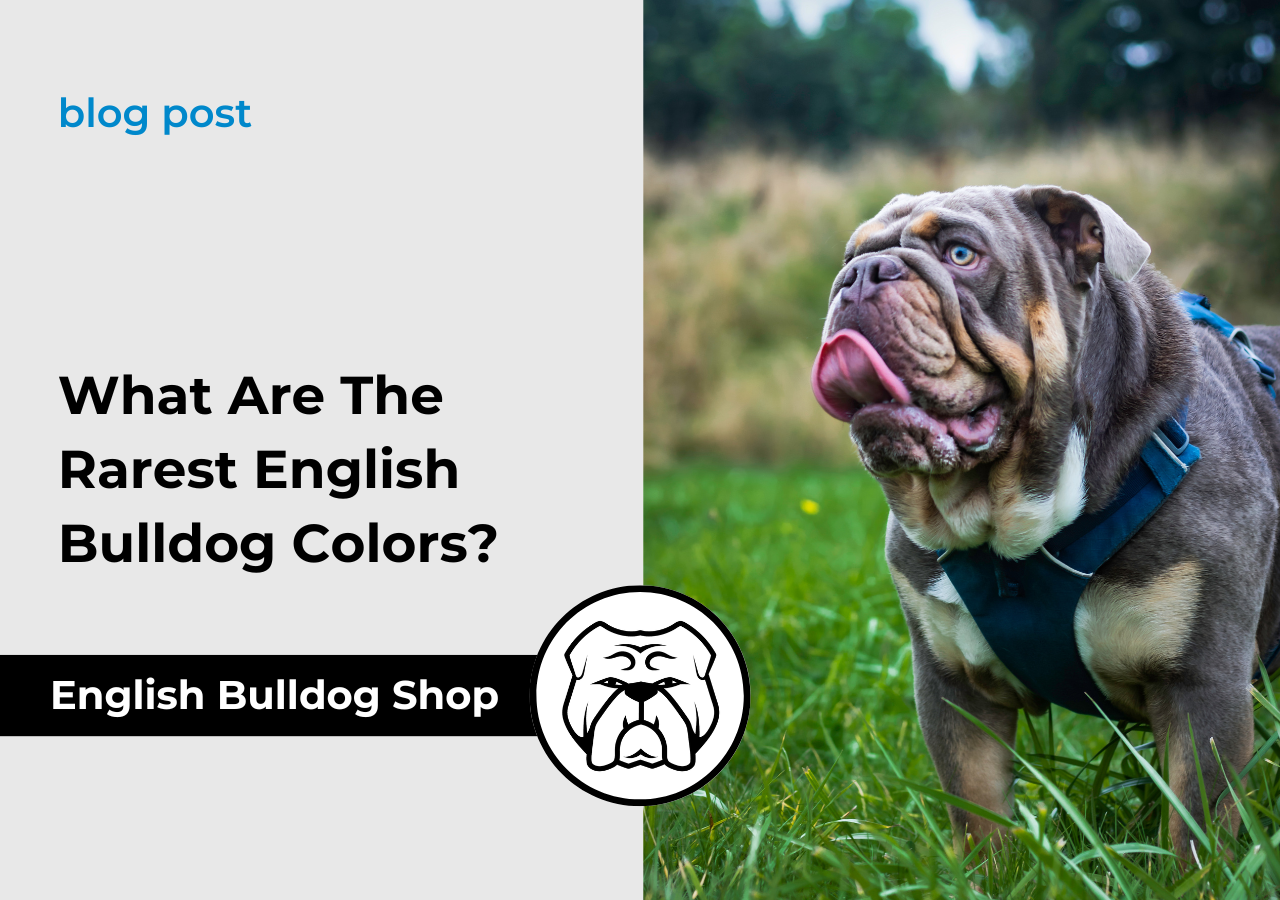
Blue merle usually means the dog has a merle pattern over a base that appears gray/blue-toned (often described as steel, slate, or smoky). In good lighting, the marbling can look almost metallic.
What to look for:
- blue-gray patches mixed with darker pigment
- marbling that’s visible on the body, not just the head
- consistent patterning that doesn’t look “edited” in photos
My buyer tip: Blue merle is one of the most heavily filtered colors online. Ask for natural daylight videos and a simple “walk-around” clip.
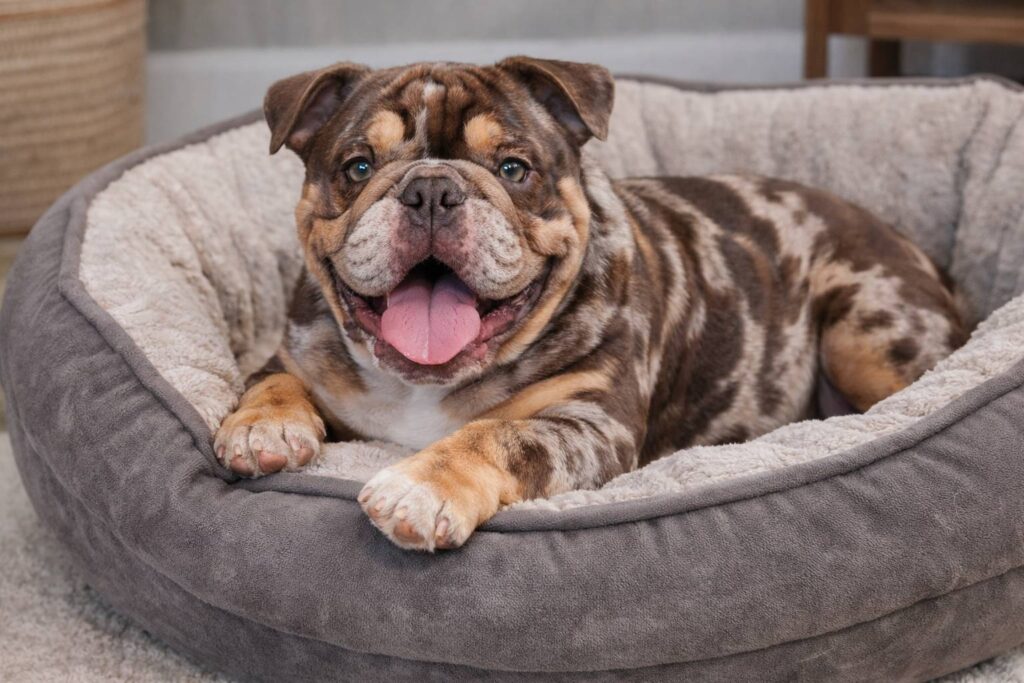
2) Chocolate merle English Bulldog
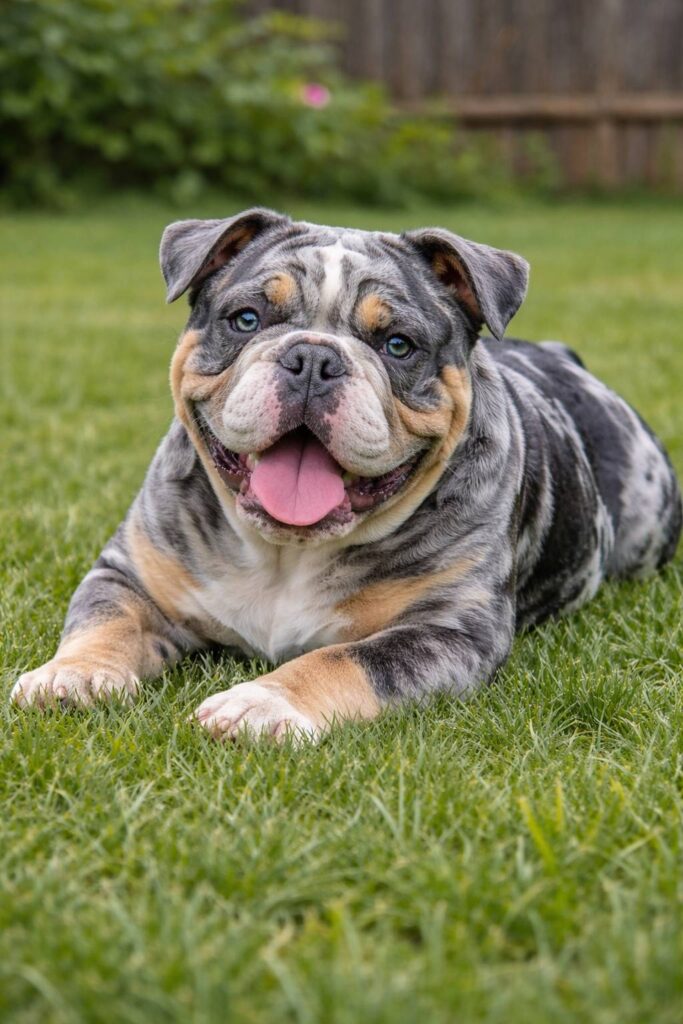
Chocolate merle is a merle pattern over a brown-based coat. It often looks warmer and “softer” than blue merle, especially when paired with lighter eyes.
What to look for:
- milk-chocolate to dark-chocolate tones
- marbling that shows clear pigment variation
- nose pigment that often matches the warmer palette (varies)
My buyer tip: Don’t buy the label—buy the breeder’s transparency. A serious breeder will explain what they mean by “chocolate” in a calm, specific way and back it up with testing if needed.
3) Lilac merle English Bulldog
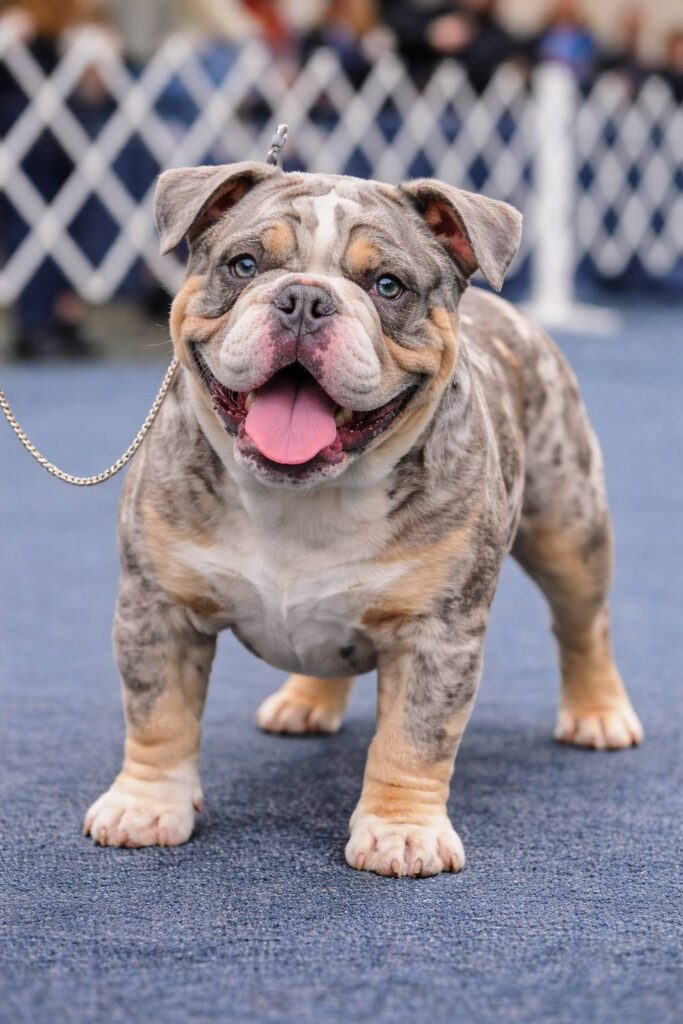
Lilac merle is one of the most hyped terms. Lilac usually refers to a very diluted chocolate look—often a pale grayish-brown/taupe effect with merle marbling.
What to look for:
- muted “pastel” appearance
- softer contrast than blue or black merle
- marbling that can be subtle in low light
My buyer tip: Lilac merle pricing can be extreme. If a breeder’s entire sales pitch is color + price, and they can’t explain structure, temperament, and care, that’s not expertise—that’s marketing.
4) Black merle English Bulldog
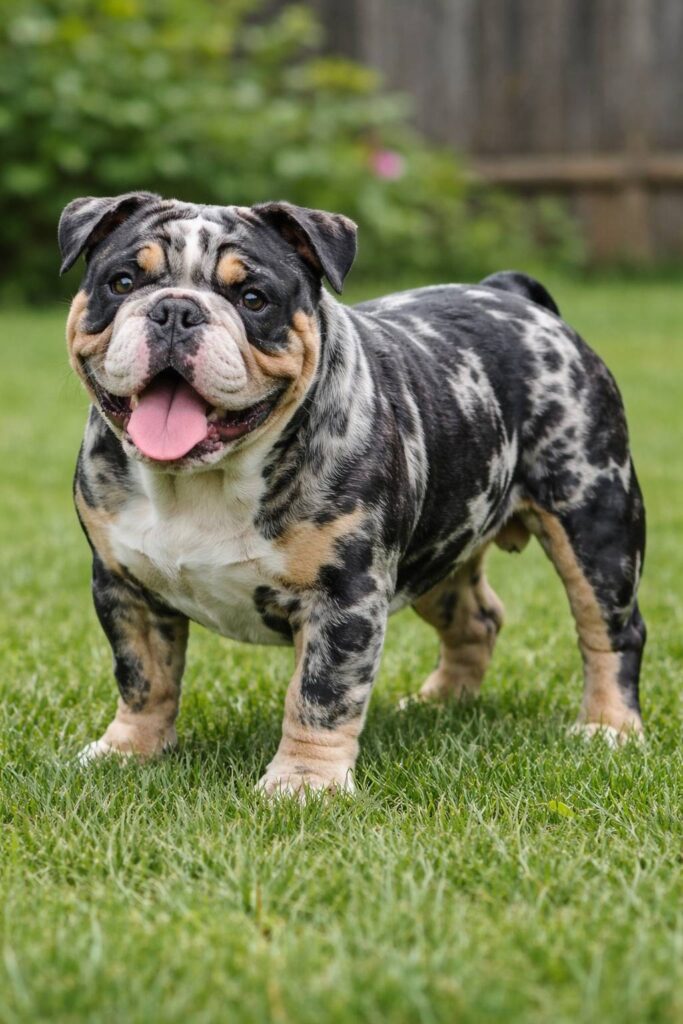
Black merle is generally used when the coat has darker pigment and the merle pattern creates dramatic contrast. Depending on lighting, some dogs marketed as black merle may look close to very dark blue merle.
What to look for:
- high contrast marbling (dark + lighter patches)
- clear patterning on the torso and sides
- photos that aren’t heavily sharpened or oversaturated
My buyer tip: Ask for pictures of the dog as a puppy and as it matured. Some coats shift noticeably over time.
5) Red merle English Bulldog
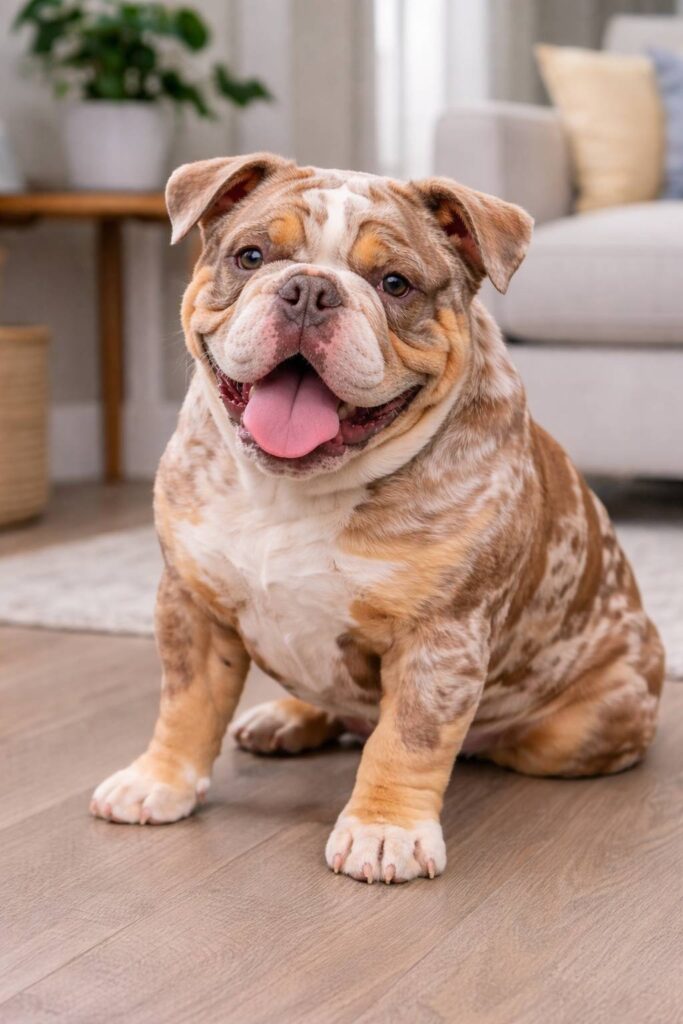
Red merle is a merle pattern over a reddish base. This can produce a warm, coppery marbling that stands out from the more common fawn/red Bulldogs you see everywhere.
What to look for:
- warm-toned marbling rather than cool gray
- consistent pigment variation
- natural daylight images (red tones can be exaggerated indoors)
My buyer tip: If you’re choosing between a red merle and a standard red/fawn Bulldog, focus on breathing comfort, movement, and temperament. Those traits will shape your daily life far more than coat color.
6) Tri merle English Bulldog
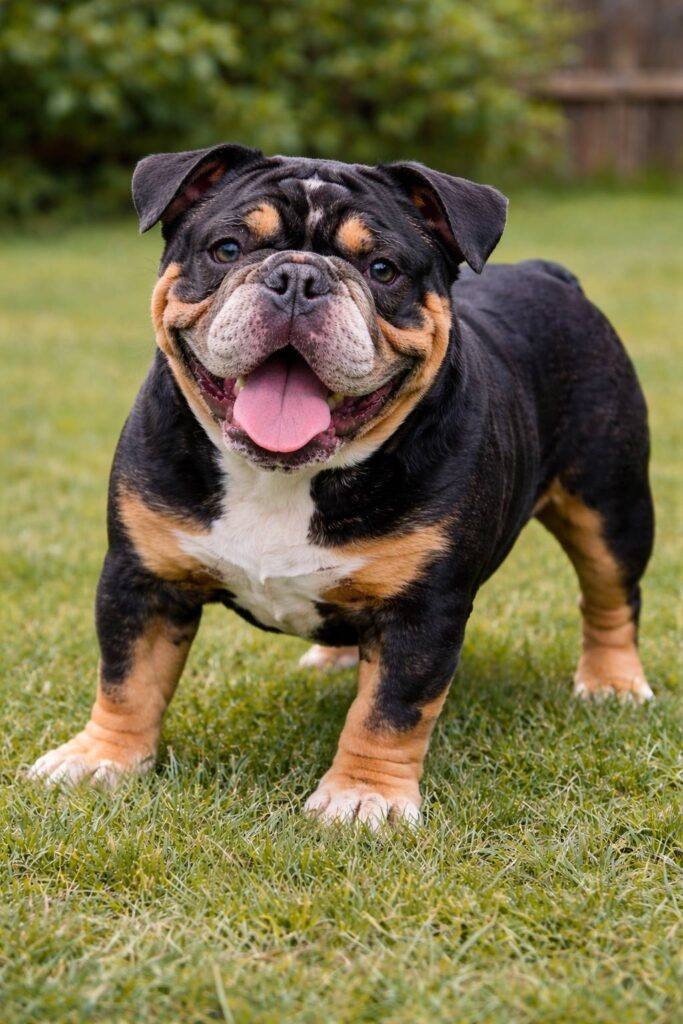
Tri merle is where you’ll see the merle pattern plus the “tri” look—typically tan points (eyebrows/cheeks/legs) and white areas. This is one of the most demanded “rare English Bulldog colors” combinations because it looks visually complex.
What to look for:
- visible tan points (not just lighting artifacts)
- white placement that looks natural, not patchy from editing
- merle marbling that doesn’t “disappear” in certain zones
My buyer tip: Tri merle listings often come with the highest pressure tactics (“only one left,” “deposit now”). Slow down. A well-bred dog is worth waiting for.
7) Cryptic (Phantom) Merle English Bulldog: the “hidden” merle
A lesser-known variation you’ll see in merle discussions is cryptic (phantom) merle. This is when a dog carries a merle allele but shows little to no visible merling, so it can look like a solid-colored English Bulldog in photos. In other words, a dog may appear non-merle yet still be genetically merle, which is exactly why ethical breeders rely on DNA color testing rather than guesswork.
From a buyer’s perspective, cryptic merle matters because it’s not just “another rare look”—it’s a transparency issue. If a breeder can’t clearly explain the parents’ genetics (or refuses to test), you can’t confidently assess what’s behind the coat label. And from a breeding-ethics perspective, cryptic merle is important because it can unexpectedly produce merle puppies when paired with a merle dog, which increases the risk of problematic merle-to-merle outcomes.
What I personally ask for: parent DNA results (merle allele status), honest natural-light videos, and a calm explanation of how the breeder avoids risky pairings.
The ethical issue you must understand: merle-to-merle breeding
If you only remember one caution from this entire guide, remember this:
Breeding merle to merle can increase the risk of serious congenital issues, including vision and hearing problems. Dogs produced from these pairings are often called double merles.
This is exactly why responsible breeders avoid merle-to-merle pairings and why you should ask direct questions before you buy.
What I ask a breeder (and what you should ask too)
- “Is either parent merle? Are both merle?”
- “Do you have color DNA results for the parents?”
- “What testing have you done for eyes and hearing in the line?”
- “Can I see the parents’ temperament and how they behave?”
If a breeder reacts defensively, refuses basic answers, or turns the conversation back to price and rarity, that’s your sign.
Care tips for merle (and rare-color) Bulldogs
A merle Bulldog doesn’t require magical grooming—but there are a few practical points I always share:
- Sun exposure: lighter pigment can be more sun-sensitive. Shade and timing matter. During summer time, make sure you put a dog cooling vest on your pet. It will help them regulate their body temperature.
- Skin folds: keep folds clean and dry (this matters for every color). Use our wet wipes for wrinkle cleaning
- Coat maintenance: gentle brushing + occasional baths with a mild dog shampoo is usually enough.
- Watch the dog, not the color: energy, comfort, appetite, and mood tell you more than pigment ever will.
FAQs
Are merle English Bulldogs rare?
They’re less common than standard colors, but “rare” is also used as a marketing term. The real question is whether the dog comes from a breeder who prioritizes sound structure, stable temperament, and ethical pairings.
Are merle English Bulldogs accepted in breed standards?
In many major breed standards, merle is not accepted for English Bulldogs. Registry rules vary, but the takeaway is simple: don’t let anyone use registration language to distract you from breeder quality.
What is a double merle English Bulldog?
A double merle is typically produced when two merle dogs are bred together. This increases the risk of congenital issues, especially involving hearing and vision.
How can I verify a merle Bulldog’s color?
The most reliable method is DNA color testing. Photos alone can be misleading due to lighting and filters.
What are standard English Bulldog colors?
Commonly referenced standard colors include brindle, fawn, red, white, and piebald combinations such as red and white or fawn and white.
What are rare English Bulldog colors?
Often-marketed rare colors include blue, lilac, chocolate, merle, and tri-color. “Rare” doesn’t automatically mean better—quality depends on breeding ethics and overall dog wellbeing.
Choose the Bulldog, not the trend
I understand the appeal of merle—when it’s real and photographed honestly, it’s genuinely striking. But as someone who takes this breed seriously, I always bring the conversation back to what matters:
- a Bulldog that breathes comfortably
- a stable temperament you can live with daily
- ethical breeding decisions (especially around merle)
- transparency and support from the breeder





 English Bulldog Jackets & Coats
 English Bulldog Hoodies
 English Bulldog Sweaters
 English Bulldog Life Jackets
 English Bulldog Costumes
 English Bulldog Shirts










2 thoughts on “Top 7 Merle English Bulldog Coat Colors (Varieties)”