

Top 5 Rare English Bulldog Colors! What Is The Rarest Bulldog Color?

Rare English Bulldog colors can definitely cause a lot of head-turning, though. I totally get the appeal of going after these rare breeds—some of these dogs look, quite literally, designer, especially in pictures! Of course, before you fall in love with your rare color English Bulldog and the price tag that goes with it, you really need to know this:
“Rare” often simply means “not show-standard,” and it can imply that the breeder valued color over health.
That being said, it is possible that despite being rare in coat, a Bulldog could still be an awesome family pet. You just need to be savvy enough to ask the right questions and “shop smart,” putting the animal’s health and temperament first and foremost.
In this piece of writing, we are going to discuss the latest buzz surrounding the rare colors and patterns of bulldogs. I will reveal everything about blue, lilac, chocolate, black, and the merle pattern.
What are the top rare English Bulldog colors?
The most commonly marketed “rare” English Bulldog colors and patterns are:
- Blue
- Lilac
- Chocolate
- Solid black
- Merle (pattern)
Breed standards are about show eligibility, not about “worth.” But they matter because they help you spot trends where breeders chase novelty. The Bulldog breed standard includes classic colors like red, white, fawn, fallow, and combinations of those, stating that other colors/markings are disqualifying for confirmation. The standard also identifies merle as a disqualification
“Rare” vs “standard” Bulldog colors: what it really means
When individuals search for “rare English Bulldog color” online, it all comes down to a number of things:
- The shade is fairly rare in everyday Bulldogs.
- It doesn’t conform in any way to the official breed standard, as used in conformation events.
- Breeders use “exotic,” “exclusive,” and so forth as labels to make it sound fancy and expensive.
Your pup can have full registration papers and still flop in the show ring. “Recognized” varies—pedigree vs. what judges actually want. Fancy colors aren’t necessarily a death sentence on the health front. The problem begins when breeders prioritize the unique look over underlying structure and testing.
Bulldogs already have skin fold problems, brachycephalic issues, and overheating concerns, all courtesy of the breed association’s own restrictions. Pick breeders who health-test rigorously and educate owners honestly, and you’ve got a thriving companion, not endless ER trips.
The Top 5 Rare English Bulldog Colors (and what to know about each)
1) Blue English Bulldog
What a blue Bulldog looks like
A blue English Bulldog usually has a cool slate-gray coat, ranging from pale silver-blue to deeper steel tones. The nose and paw pads may also look “blue-gray” rather than black.
Why blue is considered rare
“Blue” is commonly described as a dilute version of black pigment. In simplified genetics talk, you’ll see it described as “dilute” or “dd,” meaning pigment intensity is reduced.
What to watch for (the part ads rarely explain)
Here’s the balanced truth: some blue Bulldogs are perfectly fine. But dilute coats are also associated with a condition called color dilution alopecia (CDA) in some dogs, which can include hair thinning and skin scaling/itchiness. Not every blue dog gets it, but it’s a legitimate risk to understand before you buy.
If you’re considering a blue Bulldog, I’d ask breeders specifically:
- Have you produced blue dogs with recurrent skin issues or hair thinning?
- Do you track which lines do best with skin health?
- What skin issues have you seen in your adult dogs?
A responsible breeder will answer these without getting defensive.
Care tips for blue Bulldogs
If you already own a blue Bulldog (or plan to), your goal is a stable, gentle routine:
- Don’t overbathe. Overbathing can strip natural oils and worsen dryness.
- Use mild, fragrance-light products.
- Dry skin folds thoroughly after baths and after rain.
- Watch early signs: patchy thinning, flaking, itchiness, recurring bumps.
Spotting it early (before it’s a nightmare):
Puppy stage (8-16 weeks): Watch for sparse, wiry, or slow-growing coat in dilute areas. Compare to littermates—blues might look “fuzzy” or have bald spots.
Juvenile signs (3-12 months): Patchy hair loss, dry/scaly skin, mild itching, or “rat tail” (bald tail). Rub the coat backward—does it reveal flaky skin underneath? If the puppy’s skin is dry, flaky or looks like it sheds a lot, then it will probably suffer from alopecia.
Ask for vet derm photos of adults from the line. Good breeders skin-test and avoid CDA-heavy bloodlines.
2) Lilac English Bulldog
What lilac looks like
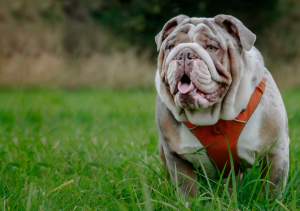
Lilac Bulldogs are often described as soft lavender-gray with warmer undertones than blue. I can describe these bulldogs look like they have more pinkish or lilac coat tones. Theis noses can also be pink and theis skin is often very sensitive. Photos can exaggerate the tone, so it helps to see the dog in natural daylight.
Why lilac is considered rare
Lilac Bulldog is commonly explained as a combination of chocolate pigment + dilution (you’ll often see “bb dd” used casually). It usually takes deliberate pairings to produce consistently, which is part of why it’s marketed as rare.
What to watch for
The main concerns are similar to other dilute coats:
- Skin sensitivity in some lines
- Potential sun sensitivity, especially if the dog has lighter pigmentation around the nose or eyes. If you buy this rare English bulldog color, then you should always protect their skin from sunlight and allergens. Rare lilac bulldogs are prone to getting sun burns and develop red patches under the coat. Therefore, my recommendation is to always check for their skin whether it’s in good condition. A minor skin issue can quickly grow into a big problem.
Lilac is one of the colors that gets marketed aggressively, so the bigger risk is breeder behavior: if the breeder talks 90% about “rare color” and 10% about health testing, that’s a red flag to me.
Practical lilac Bulldog care tips
- Avoid peak sun in summer; walk early/late when possible.
- Keep skin fold hygiene consistent (gentle cleaning and thorough drying).
- Keep weight healthy—Bulldogs do better when they’re not carrying extra load.
3) Chocolate English Bulldog
What chocolate looks like
Chocolate Bulldogs have a true brown coat—not red, not fawn. Some can have lighter eyes, but eye color varies and shouldn’t be treated like proof of quality.
Why chocolate is considered rare
Chocolate is generally described as a recessive pigment trait. That means it can be less common in many lines, and breeders may selectively pair dogs to produce it.
What to watch for
Chocolate itself doesn’t automatically mean the dog will have issues. The bigger risk is the same theme:
- Is the breeder breeding Bulldogs… or breeding colors? Unfortunately, some breeders breed rare English bulldog colors just to earn a lot of money.
Because Bulldogs already require thoughtful structure and health management, I’d rather buy from a breeder who can clearly explain:
- airway and breathing priorities,
- body condition and mobility,
- skin health across their adult dogs,
- and temperament/socialization plans.
Chocolate Bulldog care tips
Chocolate Bulldogs usually benefit from classic Bulldog care:
- Keep facial folds clean and dry.
- Maintain a steady weight. If these dogs become obese, then they can start suffering from breathing issues.
- Monitor ears and paws (common places for irritation). Rare English bulldogs are prone to ear infections, so you should clean them weekly from dirt and debris.
- Keep exercise structured and avoid overheating.

4) Solid Black English Bulldog
What “solid black” usually means
A “solid black English Bulldog” is heavily marketed, but here’s what many buyers don’t realize:
“Black” is sometimes used loosely in ads.
Lighting, coat condition, and subtle patterning can make a dog look darker than they are.
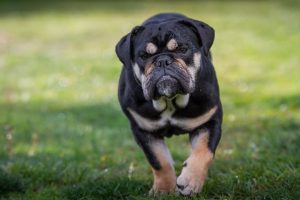
Why black is considered rare
Solid black isn’t part of the classic Bulldog standard color set, which is why it’s treated as non-standard/disqualifying for conformation.
What to watch for with “solid black” Bulldogs
Because it’s such a marketing label, I recommend:
- Ask for photos in natural daylight.
- Ask for clear photos of both parents.
- Ask for health testing proof and adult dog history.
- Be cautious with sellers who push urgency (“someone else is buying today”).
Most importantly, don’t let a dramatic coat color distract you from structure and breathing.
5) Merle English Bulldog (the controversial one)
What merle looks like
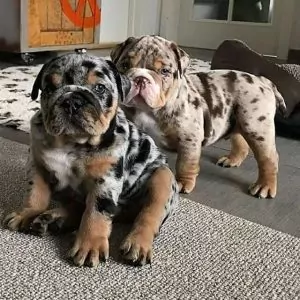
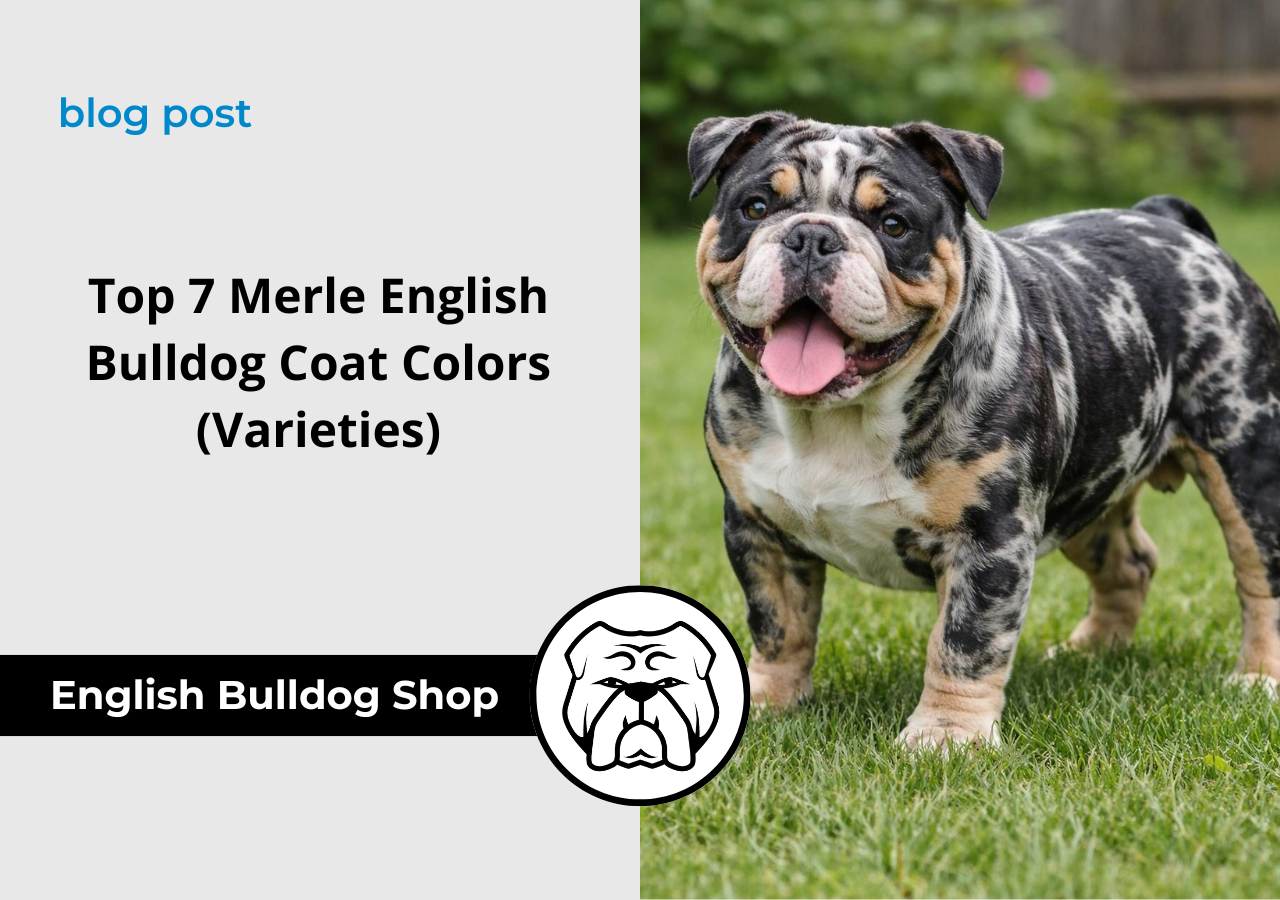
Merle is a pattern, not a single color. It creates a mottled, marbled look with patches—often sold as blue merle, chocolate merle, lilac merle, etc.
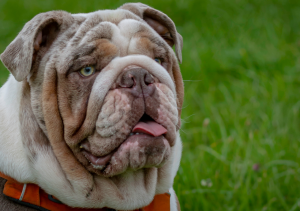
Why merle is controversial
The Bulldog breed standard specifically calls merle a disqualification for confirmation.
But the more serious reason merle needs careful discussion is health genetics. Merle can be associated with eye and ear abnormalities, and the risk is much higher in double merle dogs (dogs inheriting merle from both parents).
The rule I won’t compromise on
Never support merle-to-merle breeding.
That’s how double merle puppies happen, and it can lead to severe outcomes.
How to buy merle responsibly (if you’re considering it anyway)
If someone is selling merle Bulldogs, I’d look for:
- Proof they do not breed merle-to-merle
- Transparency about genetics and vet checks
- Willingness to discuss hearing/vision risks honestly
- A contract, a return policy, and lifetime support
A responsible breeder won’t act annoyed by these questions. They’ll respect you for asking.
Why rare colored Bulldogs cost more (and why price isn’t proof)
Most price differences come from:
- supply and demand. This includes C-section, artificial insemination, small number of puppies per litter.
- selective breeding for recessive traits. A reputable breeder always perform health and genetic testing before mating dogs.
- heavy marketing and “trend” value.
But a higher price does not automatically mean:
- better structure,
- healthier lines,
- better early puppy socialization,
- or responsible breeding. It can mean that the breeder only does good marketing. I remember a kennel that was very popular on Instagram but was actually a puppy mill for rare bulldogs. So, before you buy a rare English bulldog puppy, make sure to ask for recommendations and check the kennel’s Google reviews. If you ask me, I would never buy a dog online. I would always choose to see it in person and to ask a breeder all the questions I want. Observing the puppy’s parents is also important and it tells you a lot about the care the bitch gets. Look at her coat, how she walks, and whether she looks healthy and happy. Dull-looking coat, dry skin, sunken eyes and a dog who breathes heavily should always be alarming signs.
Real-life care tips for rare English Bulldog colors (owner checklist)
Even though colors get the attention, daily Bulldog care is what actually determines quality of life.
1) Skin and coat: simple routines win
Bulldogs are prone to skin sensitivity. Regardless of color:
- avoid harsh, heavily scented products,
- don’t overbathe,
- dry folds thoroughly,
- watch for recurring hotspots or itchy patches.
If your Bulldog has repeat issues, treat it like a health management plan—not a DIY experiment.
2) Heat safety is non-negotiable
Bulldogs are brachycephalic, which affects how efficiently they cool themselves. Overheating can happen fast, especially in humidity and sun.
Practical habits that help:
- walk early morning or late evening in warm months,
- keep walks shorter and add shade breaks,
- bring water and avoid hot pavement.
Cooling gear can help, but it should support good habits—not replace them.
3) Sun sensitivity: take it seriously in pale pigment dogs
Dogs with lighter pigmentation around the nose/eyes or thinner coat coverage can be more sun-sensitive. If you notice redness or irritation after sun exposure, talk to your vet about safe options.
4) Don’t ignore breathing and mobility
Bulldogs should breathe comfortably at rest, recover quickly after light activity, and move without pain. If a breeder dismisses breathing issues as “normal for the breed,” I personally walk away.
Breeder checklist: 12 questions to ask before buying a “rare color” Bulldog
If you’re shopping for a rare color puppy, ask these before you send any deposit:
- What health testing was done on both parents? Can I see proof?
- Have the parents had any breathing interventions or surgeries?
- How do your adult dogs handle heat and exercise?
- Can I see temperament videos of the parents?
- What’s your socialization plan from weeks 3–10?
- What does your contract cover (health guarantee, return policy, support)?
- What is the puppy’s vet history so far (vaccines/deworming/checks)?
- If the puppy is merle: do you ever breed merle-to-merle? (Only acceptable answer: no.)
- What skin issues have you seen in your lines?
- What do you feed and why?
- Can you provide references from past puppy buyers?
- If my situation changes, will you take the dog back?
Big red flags
- The breeder talks mostly about “rare” and barely about health.
- They refuse to show proof of testing or vet checks.
- They pressure you to decide immediately.
- They won’t discuss merle risks transparently.
FAQs about Rare English Bulldog Colors
What is the rarest English Bulldog color?
“Rarest” depends on which genes exist in a breeder’s lines. In the pet market, lilac and certain merle combinations are often marketed as the rarest, but rarity alone shouldn’t guide your decision. I would always choose a healthy, well-bred Bulldog over a trendy coat.
Are rare English Bulldog colors recognized by the AKC?
The Bulldog breed standard lists classic colors like red, white, fawn, and fallow (and combinations) and states that other colors/markings are disqualifying for conformation; merle is specifically listed as a disqualification. Registration paperwork and conformation eligibility aren’t always the same conversation, so it’s important to clarify what someone means by “recognized.”
Are merle English Bulldogs healthy?
Some merle Bulldogs live normal lives, but merle genetics can be associated with eye and ear abnormalities, and the risk is higher in double merle dogs. Avoid merle-to-merle breeding and choose only breeders who are transparent, responsible, and health-focused.
Do blue and lilac Bulldogs have more skin problems?
Dilute colors like blue (and lilac, which includes dilute) can be associated with coat/skin issues in some dogs, including hair thinning and flaky or itchy skin. Not every dog is affected, but it’s a real risk to understand before buying.
Why are rare colored Bulldogs more expensive?
Usually because of demand, selective breeding for uncommon traits, and marketing. Price alone isn’t proof of quality. Health testing, ethical breeding practices, and honest after-sale support matter far more.
What Is The Rarest Bulldog In The World?
One of the most viable contenders for “rarest bulldog” is the Alapaha Blue Blood Bulldog. It’s estimated to have only ~120–150 living members. This is the data from Wikipedia from early 21st century. Another quite rare breed of bulldog is the Campeiro Bulldog (Brazil. It was once near-extinct, recognized by Confederação Brasileira de Cinofilia (2001), and also recognized by Fédération Cynologique Internationale in 2025. It’s “rare” in many places, yet is slowly gaining in numbers.
Do not confuse “rare bulldog” with “rare color
Much of what is described as “rare bulldog” advertising actually refers to non-standard coloration in the English Bulldog, such as “merle” and “lilac” colorings, as opposed to referring to a rare breed of dog. Some clubs may not recognize merle coloring in Bulldogs, or may automatically exclude it due to health and breed standards.
Choose health first, color second
I love unique Bulldogs, but I’m careful with how we define “rare.” The healthiest choice is usually the simplest one:
Choose a breeder who talks about breathing, structure, temperament, and health testing more than color.
If the breeder’s whole pitch is “rare, exotic, pricey,” I treat that as a warning—not a selling point.





 English Bulldog Jackets & Coats
 English Bulldog Hoodies
 English Bulldog Sweaters
 English Bulldog Life Jackets
 English Bulldog Costumes
 English Bulldog Shirts










8 thoughts on “Top 5 Rare English Bulldog Colors! What Is The Rarest Bulldog Color?”