
Do English Bulldogs Drool? Why It Happens and When to Worry

If you’re thinking about getting an English Bulldog or you already share your couch with one—you’ve probably asked (or Googled at 2 a.m.): do English Bulldogs drool? The answer is yes… often. But the more useful question is why do English Bulldogs drool, when it’s totally normal, and when it’s a sign that something is off.
Why do English Bulldogs drool?
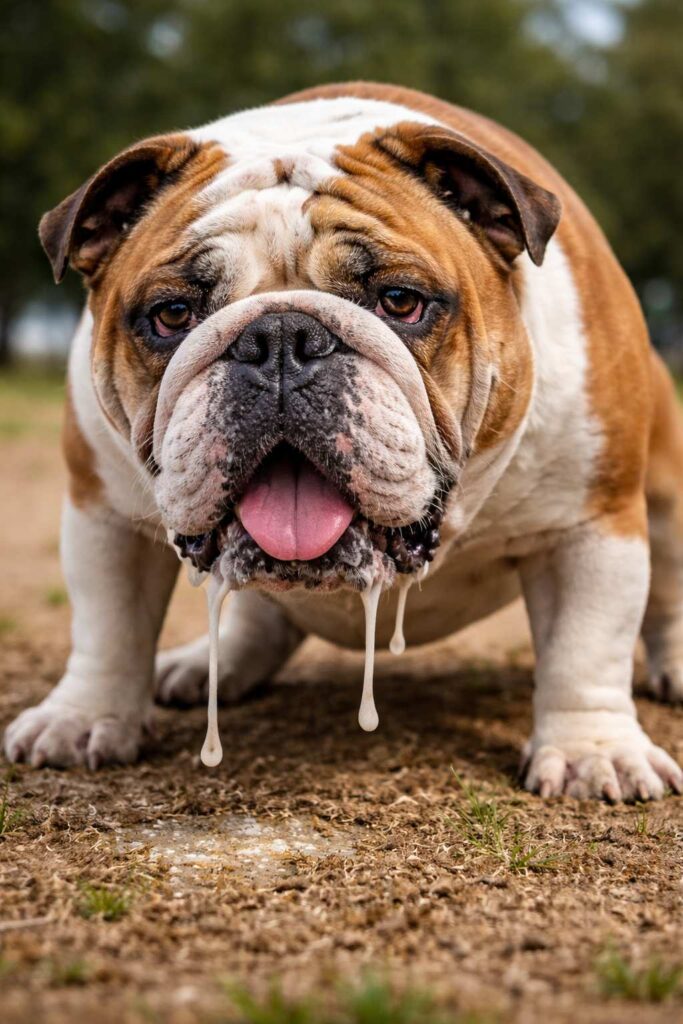
English Bulldogs drool mostly because of their anatomy. Their signature face isn’t just cute. The bulldog’s underbite directly affects how saliva stays in or escapes the mouth.
1) Loose jowls and heavy flews (the #1 reason)
Bulldogs have loose, heavy lips (flews) and deep jowls. Saliva pools inside the mouth, and because the lips don’t form a tight seal, it leaks out—especially from the corners. Their mouths are shaped like a “”deflated balloon” and they simply can’t regulate it on their own.
That’s why many Bulldogs look like they’re “melting” a little when they’re relaxed. It’s not surprising why their otherwise called “clowns” of the dogs’ world.

2) Brachycephalic structure (flat-face mechanics)
English Bulldogs are a brachycephalic breed. It means they have a shortened skull and muzzle. This can affect:
- how they breathe (more mouth breathing = more drool). This is especially visible when they have physical activity. Even after relaxing strolls, bulldogs drool a lot and breathe heavily.
- how they hold their tongue in the mouth
- how efficiently they swallow saliva
3) Their bite and dental crowding can contribute
Many Bulldogs have crowded teeth, an underbite, or other jaw alignment quirks. When the mouth structure isn’t “neat and tidy,” saliva can escape more easily.
4) Saliva production is normal—Bulldogs just wear it outside
Saliva helps digest food, protect gum tissue, and keep the mouth lubricated. Bulldogs aren’t “making saliva for no reason.” It’s just that their facial structure makes it more visible.
So yes: bulldog drooling is often expected. The goal is learning your dog’s baseline.
Do bulldogs drool all the time?
Not necessarily. Some drool constantly, some only drool in specific situations, and some are surprisingly neat for the breed.
So, do all bulldogs drool? No. But English Bulldogs are more likely to drool than many other breeds because of their anatomy.
Here’s what I watch for:
- Predictable drool (food, excitement, heat, naps) = usually norma
- Sudden, heavy drool with other symptoms = deserves attention
When does bulldog drooling happen most?
If you want to understand your dog’s drool, start paying attention to the moment it ramps up. Most “normal drool” happens in pretty specific scenarios:
1) Food anticipation (classic “pre-meal drool”)
Just like humans salivate when we smell something good, dogs do too. Bulldogs are especially dramatic about it. The sound of a treat bag can start the waterfall. Also, if you like to cook and spend a good part of the day in the kitchen, don’t be surprised if your bulldog follows you closely. All those smells really represent a real “explosion” for his senses.
2) After drinking water
Bulldogs often drink like they’re speed-running hydration. Water mixes with saliva and spills from the jowls. Normal, but messy. If you want less water to end up on your floors, then we advise you to invest in a good anti-spill bowl. Browse our collection of bowls and find one that suits your dog’s needs.
3) Excitement or stress
Some Bulldogs drool when they’re overstimulated—guests arriving, a vet visit, fireworks, or even a car ride. Stress drool is real. Also, it is important to note that English Bulldogs are prone to separation anxiety. So, if you suddenly start leaving your bulldog alone at home, don’t be surprised if he starts to look stressed.
4) Heat and panting (very important in Bulldogs)
Bulldogs struggle in heat because they don’t cool down as efficiently as long-nosed dogs. When they pant hard, drool often increases. This is one reason owners report bulldogs drooling excessively in warmer months.
5) Chewing, playing, licking
Chew toys, bones, stuffed Kongs—anything that gets the mouth working can trigger drooling. That’s totally normal.
6) Motion sickness in the car
If your Bulldog drools in the car and looks uneasy, nausea could be the cause. You may also notice lip licking, gulping, whining, or vomiting.
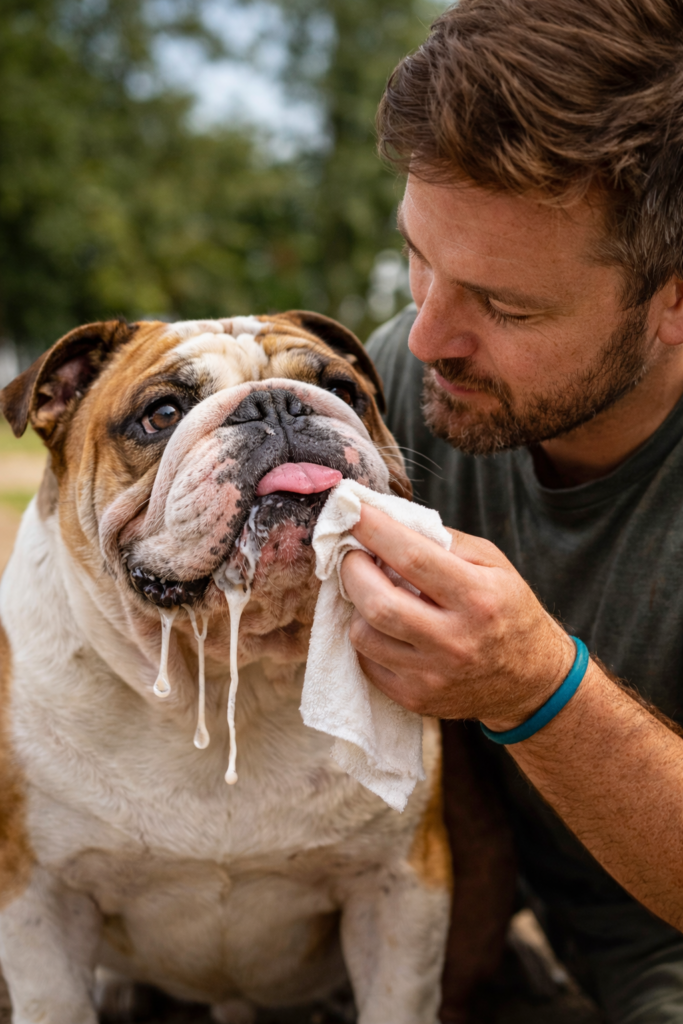
Bulldog drooling vs. bulldogs drooling excessively
This is where owners get confused: “My Bulldog always drools… so how would I know if it’s a problem?”
I use a simple rule: excessive drool is a sudden change from your dog’s normal pattern or drool that comes with warning signs.
Bulldogs drooling excessively can look like:
- drool that is suddenly heavier, thicker, or constant
- foamy drool (often nausea, stress, or mouth irritation)
- drooling paired with pawing at the mouth
- drooling plus vomiting, lethargy, or refusing food
- drooling plus swelling (face, lips), hives, or breathing issues
- drooling plus signs of overheating
If you know your Bulldog’s “usual drool moments,” it becomes much easier to spot the abnormal ones.
What illness makes dogs drool?
There are several medical causes for drooling. Some are minor, some require urgent care. Here are the big categories I consider:
1) Dental disease and mouth pain
Dental issues are a very common cause of sudden drooling:
- gum inflammation
- broken or infected teeth
- mouth ulcers
- abscesses
You might also notice bad breath, drooling on one side, reluctance to chew, or your dog dropping food.
2) Something stuck in the mouth
Sticks, bones, toy fragments, hair—anything lodged can trigger drooling. Bulldogs may paw at their mouth, gag, or chew strangely.
3) Nausea and GI upset
Nausea is one of the most overlooked causes. Dogs drool when they feel sick, and Bulldogs are not an exception. Common triggers include:
- eating trash or fatty food
- food intolerance
- stomach irritation
- pancreatitis
- parasites
Nausea drool often comes with gulping, lip licking, and restlessness. English bulldog who is going to throw up will drool excessively and seem nervous.
4) Heat stress and heatstroke (a serious Bulldog risk)
This is one of the most important “bulldog owner” topics. If your Bulldog is in warm weather and shows:
- heavy panting
- thick drool
- weakness
- bright red gums or very pale gums
- wobbliness or collapse
…that can be heatstroke, and it’s an emergency. To protect your English bulldog from heatstroke, my advice is to always put him/her in a dog cooling vest. Cooling vests for bulldogs are made from heat-resistant fabrics that control the dog’s body temperature. They should be worn wet and as your gremlin walks outside, he/she will get a pleasant cooling effect.
5) Allergic reactions
Sudden drooling with swelling, hives, or itching can be allergic. Bee stings are a common one. Any sign of breathing difficulty needs urgent help.
6) Toxins or irritants
Some toxins cause heavy drooling fast:
- certain houseplants
- cleaning chemicals
- insecticides
- medications (including accidental ingestion)
- some topical products (if licked)
If you suspect poisoning, call a vet immediately. In the first 2 hours, there are high chances to prevent your dog from severe complications.
7) Throat problems and swallowing pain
Conditions affecting the throat or esophagus can cause drooling because swallowing becomes uncomfortable. You may see gagging, repeated swallowing, or refusal to eat.
8) Neurological issues (less common, but important)
Seizures (including focal seizures), vestibular problems, or other neurological conditions can include drooling—usually with other signs like confusion, wobbliness, head tilt, or unusual eye movements.
Does drooling mean my dog is in pain?
Not always—but it absolutely can.
Bulldogs drool when they’re happy and relaxed, so drooling alone doesn’t equal pain. What I look for is drooling paired with behavior changes.
Drooling may suggest pain if you also notice:
- pawing at the mouth or rubbing face on furniture
- refusing food or chewing on only one side
- whining, hiding, irritability
- sudden sensitivity around the head
- swollen jaw or bleeding gums
- drool starting abruptly after chewing something hard
If your Bulldog’s drool suddenly increases and they act different, pain is on the list.
How to manage bulldog drooling (without losing your mind)
You can’t fully stop a Bulldog from drooling if it’s anatomy-based, but you can manage it like a seasoned owner.
1) Create a “drool routine”
This sounds silly until you do it:
- keep microfiber cloths in every room you hang out in
- keep one by the water bowl
- keep one near the door (walks + excitement = drool)
Microfiber works better than paper towels and feels nicer on the face folds.
2) Use a splash mat under the water bowl
Bulldogs don’t sip—they perform. A mat prevents constant floor cleanup.
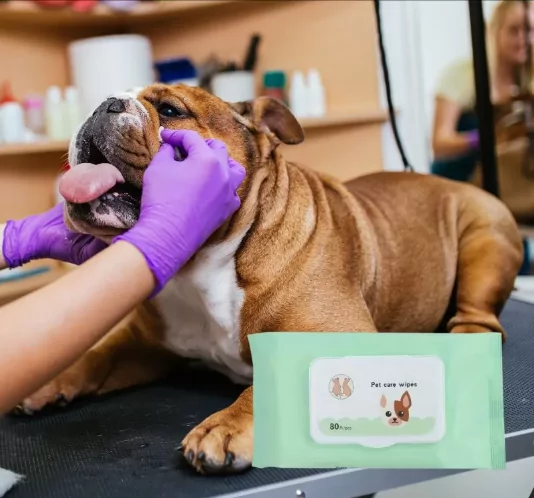
3) Clean and dry face folds daily
Drool + moisture trapped in folds can cause irritation or infection.
- gently wipe folds with a damp cloth or dog-safe wipe. My advice is to use our Wrinkle wipes for bulldogs because they’re specially formulated for bulldog’s gentle skin.
- dry thoroughly (the drying part matters)
4) Keep dental care consistent
Good oral care can prevent the kind of drool that comes from pain or infection:
- brush a few times per week if you can
- use vet-approved dental chews
- schedule professional cleanings when needed
5) Manage heat proactively
If you remember one thing from this article, let it be this: Bulldogs can overheat quickly.
- walk early morning or late evening
- avoid hot pavement
- keep cool water available
- use fans/cool mats
- never leave them in a parked car
6) If car drool is nausea, treat it like nausea
Try:
- shorter trips
- no big meal right before the ride
- calm, steady driving
If it’s frequent, your vet can recommend anti-nausea options.
7) Choose chew toys carefully
Avoid extremely hard chews that can crack teeth. Dental pain is a sneaky drool trigger.
When should I worry about bulldogs drooling excessively?
I get cautious when drool is paired with any of these:
- vomiting or bloated belly
- lethargy or weakness
- refusal to eat or drink
- swollen face, hives, itching
- gagging, choking, difficulty swallowing
- breathing trouble, blue/pale gums
- heat exposure + heavy panting + thick drool
- possible toxin exposure
In those cases, I don’t “watch and wait.” I call.
FAQ: English Bulldog Drooling
Do bulldogs drool more than other dogs?
Many do. Their jowls and loose lips make saliva more likely to escape, so bulldog drooling is often more noticeable.
Do bulldogs drool when they sleep?
Yes—relaxed jaw muscles and slightly open mouth can let drool leak out. This is common, especially after drinking water.
Do all bulldogs drool?
No. Do all bulldogs drool? Not necessarily. Some drool lightly, some heavily, and some mostly only drool around food or heat.
Why do English Bulldogs drool when they’re excited?
Excitement can increase salivation and mouth breathing. You’ll often see drool when guests arrive, during play, or before walks.
What illness makes dogs drool the most?
Dental infections, nausea/GI problems, toxin exposure, allergic reactions, and heatstroke are common medical causes of heavy drooling.
Does drooling mean my dog is in pain?
Not always, but it can—especially if drooling is sudden and paired with pawing at the mouth, refusal to eat, whining, or other behavior changes.
What should I do if my bulldog is drooling excessively?
Check for obvious causes (heat, stress, car sickness, mouth irritation). If it’s sudden, intense, or paired with vomiting, lethargy, swelling, breathing changes, or refusal to eat—contact your vet promptly.



 English Bulldog Jackets & Coats
 English Bulldog Hoodies
 English Bulldog Sweaters
 English Bulldog Life Jackets
 English Bulldog Costumes
 English Bulldog Shirts