
English Bulldog Pregnancy: Must-Know Secrets & Tips!


When my Bulldog, Daisy, got pregnant, I had a million questions. How long are Bulldogs pregnant for? Do English Bulldogs need C-sections? How many puppies do English Bulldogs have? If you’re asking the same things, you’re in the right place. In this guide, I will reveal you everything you need to know about English bulldog pregnancy and how you should take care of your dog.

Understanding English Bulldog Reproduction
Heat Cycle in Female English Bulldogs
If you’re planning to breed your English Bulldog, you need to understand her heat cycle first. Bulldogs typically go into heat every six months and stay in heat for about 2-3 weeks. But not every heat cycle is ideal for pregnancy.
I made the mistake of thinking Daisy could get pregnant anytime during those three weeks—wrong! The best time for breeding is between days 10-14 of her cycle. That’s when she’s ovulating and most fertile.
Signs your Bulldog is in heat:
- Swollen vulva (it’ll look noticeably bigger)
- Bloody discharge that gets lighter over time
- Increased clinginess or moodiness
- Flagging her tail when male dogs are around
If you’re breeding your Bulldog, timing is everything. Miss that window, and you’re waiting another six months!

English Bulldog Pregnancy: Mating and Conception
How Long Are Bulldogs Pregnant For?
One of the first things I Googled when Daisy got pregnant was: How long are British Bulldogs pregnant for?
The answer? Around 63 days.
That’s roughly 9 weeks, just like most dog breeds. But here’s the thing—because English Bulldogs are prone to complications, you need to be extra prepared as they approach their due date. However, it’s important to note that not all pregnancies last exactly this long—some Bulldogs may give birth a few days earlier or later. The gestation period for English Bulldogs is divided into three trimesters, each lasting around three weeks.
- Weeks 1-3: The fertilized eggs implant into the uterus, but there are usually no visible signs of pregnancy.
- Weeks 4-6: The belly starts to expand, and your Bulldog may become more affectionate or moody.
- Weeks 7-9: Rapid puppy growth happens, and the mother begins nesting behaviors.
Since Bulldog pregnancies can be risky, regular vet visits are crucial to monitor the puppies’ development and ensure the mother’s health. Around day 45, an X-ray can confirm the number of puppies she’s carrying.
As your Bulldog approaches the final two weeks, keep a close eye on her behavior. A drop in temperature (below 98°F) signals that labor is near. Because most Bulldogs require a C-section, discuss your options with your vet and schedule the procedure in advance to avoid emergencies.

Artificial Insemination vs. Natural Mating
If you’ve ever seen two Bulldogs try to mate naturally, you know…it doesn’t always work out. Their short legs and broad chests make it physically difficult. That’s why most Bulldog pregnancies happen through artificial insemination (AI).
Daisy had her AI done at the vet’s office. It was a quick, painless process, and within a few weeks, she started showing signs of pregnancy—more naps, a bigger appetite, and a belly that grew fast!
Stages of English Bulldog Pregnancy
So now you know how long Bulldogs are pregnant for—let’s break it down week by week.
First Trimester (Week 1-3)
- The fertilized eggs implant into the uterus.
- No big changes yet—your pregnant Bulldog might still act normal.
- Some Bulldogs experience morning sickness (Daisy got picky with her food).
Second Trimester (Week 4-6)
- Belly starts to get bigger.
- Nipples darken and enlarge.
- Energy levels change—some Bulldogs become more affectionate, others more independent.
- This is a good time for an ultrasound to confirm pregnancy.
Third Trimester (Week 7-9)
- Puppies grow FAST—you’ll see and feel them move inside her belly.
- She’ll start nesting—scratching at blankets and looking for a comfy spot.
- She might lose her appetite right before labor.
- Temperature drop below 98°F is a sign labor is starting.
Signs and Symptoms of English Bulldog Pregnancy
How to Tell If Your Bulldog Is Pregnant
Bulldog pregnancy can be sneaky at first. I didn’t realize Daisy was pregnant until week 3 or 4 when her belly started growing.
Here’s what to look for:
- Bigger belly and nipples
- Mood swings (clingy one day, distant the next)
- Increased appetite (but might be picky early on)
- Sleeping more than usual
If you suspect your Bulldog is pregnant, get an ultrasound at 25-30 days or an X-ray at 45 days to confirm.

Nutrition and Diet During English Bulldog Pregnancy
A pregnant English Bulldog needs extra nutrients—but not too much food! Overfeeding can make puppies grow too big, making delivery harder.Feeding a pregnant English Bulldog correctly is one of the most important aspects of ensuring a healthy pregnancy and smooth delivery. The right nutrition helps the puppies grow properly while keeping the mother strong and energized.
Best foods for Bulldog pregnancy:
- High-quality puppy food – Puppy food is richer in protein, vitamins, and calories than regular adult dog food, which makes it ideal for pregnant Bulldogs
- Lean meats (chicken, turkey, beef) – Provides essential protein for muscle and puppy development.
- Eggs and cottage cheese – Excellent sources of calcium to support the puppies’ bone growth.
- Pumpkin and sweet potatoes – Help with digestion and provide fiber.
- Omega-3 supplements – They help develop healthy puppy brains and nervous systems.
What to Avoid:
- Too many carbs can lead to excess weight gain, making delivery more difficult.
- Excess calcium supplements – They can cause eclampsia (a life-threatening calcium deficiency) after birth.
- Raw foods often carry bacteria that is harmful to both mom and puppies.
Feeding Schedule for a Pregnant Bulldog:
- Weeks 1-4: Feed her normal portions of high-quality dog food.
- Weeks 5-6: Increase food portions by 25% to support puppy growth.
- Weeks 7-9: Smaller, more frequent meals (her stomach is tight with puppies, so large meals can make her uncomfortable).
After giving birth, she’ll need even more food and water to produce milk for her puppies. Keep an eye on her weight and energy levels, and always consult your vet for any concerns about diet or supplements.
English bulldog pregnancy: Preparing for Whelping (Labor and Delivery)
Do English Bulldogs Have to Have C-Sections?
Short answer: Yes, most do.
Bulldog puppies have big heads and broad shoulders, and most mothers can’t deliver naturally. If labor isn’t progressing after an hour of pushing, get to the vet—fast.
My vet recommended scheduling a C-section around day 60 to avoid an emergency. Daisy had her C-section, and within an hour, I was holding her five tiny, wrinkly puppies.
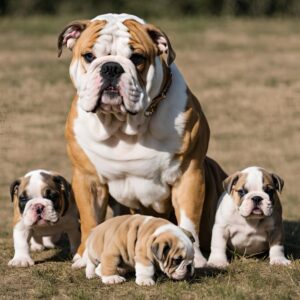
Here are some reasons why a C-section is necessary:
- Bulldog puppies have big heads which can get stuck in the birth canal.
- The mother’s pelvis is too small to have a natural delivery.
- Dystocia (difficult labor) is common in Bulldogs and prolonged labor can be life threatening.
Signs your Bulldog needs immediate veterinary assistance during labor:
- More than 2 hours between puppies.
- Contractions for over 30 minutes with no puppy appearing.
- Green or bloody discharge with no puppies born.
Even if you think your Bulldog will deliver naturally, always be prepared for an emergency vet visit. Having a C-section plan in place will make the delivery smoother and safer for mom and puppies.
English bulldog pregnancy: Postpartum Care
How Many Puppies Do English Bulldogs Have?
English Bulldogs usually have 3-5 puppies, though some can have up to 8.
Daisy had five, but one was much smaller than the others. If you have a runt of the litter, keep a close eye on them and be ready to bottle-feed if necessary.
Caring for Newborn Bulldog Puppies
Keeping Puppies Warm and Fed
Newborn Bulldog puppies can’t regulate their body temperature, so keeping them warm is crucial.
- Set up a heating pad or heat lamp at 85-90°F
- Make sure they nurse every 2-3 hours (or use formula if needed)
- Weigh them daily—they should be gaining weight steadily.
When Do Bulldog Puppies Open Their Eyes?
Bulldog puppies are born with their eyes closed and stay shut for 10-14 days. This is completely normal as their eyes are still developing.
During this time puppies rely on their sense of smell and touch to find their mum and nurse. As newborns can’t see or hear they need a warm, safe and quiet environment to grow.
What to Expect as They Open Their Eyes:
- Day 10-14: Puppies will start blinking and opening their eyes slightly.
- Day 14-18: Eyes fully open but vision is still blurry.
- Week 3: Puppies start recognising shapes, movement and their surroundings.
- Week 4-5: Eyesight is much clearer and they become more playful.
Caring for Their Eyes:
- Keep their whelping area clean to prevent eye infections.
- Don’t force their eyes open—this can damage their vision.
- If you see swelling, discharge or cloudy eyes get to the vet ASAP.
Once they open their eyes they’ll become more curious and start exploring so make sure they’re in a safe and puppy proofed area. Watching them take in the world for the first time is an adorable milestone you won’t want to miss!
READ ALSO: What Age Can I Stud My English Bulldog?
Going Through English Bulldog Pregnancy
English Bulldog pregnancy is not for the faint of heart, but it’s one of the most rewarding experiences ever. From watching my Bulldog’s belly grow to holding her tiny puppies for the first time, it was a journey full of emotions.
If you’re planning to breed your Bulldog, do your research, work with a vet, and be prepared for a C-section. Bulldog pregnancy comes with challenges, but with the right care, you’ll soon have a litter of squishy, adorable puppies to love!
Read Also: How to Stop English Bulldog Vomiting: 5 Things to Know





 English Bulldog Jackets & Coats
 English Bulldog Hoodies
 English Bulldog Sweaters
 English Bulldog Life Jackets
 English Bulldog Costumes
 English Bulldog Shirts